
Getting your dress pressed before the wedding is not a luxury — it is the one step that stands between a stunning gown and a wrinkled disappointment in every photograph.
Most brides spend months finding the perfect dress, weeks getting it altered, and then overlook the final finishing step entirely.
Here is everything you need to know about pre-wedding pressing and why it matters more than most people expect.
Pressing is the final step that completes the whole process
Alterations fix the fit. Pressing completes the look.
Even a perfectly fitted gown that has been stored in a garment bag for weeks before the wedding will carry compression creases, fold marks, and fabric memory from hanging or folding.
These do not fall out on their own — at least not reliably, and certainly not on a structured gown with multiple layers of tulle, satin, or chiffon.
The difference between a pressed gown and an unpressed one is visible in every photograph. Pressed fabric catches light cleanly and drapes exactly as the designer intended.
Fabric with even minor crease lines creates shadows and texture that no camera angle can flatter. For Chicago brides getting married at high-end venues — from the Gold Coast to Oak Brook — the visual standard is high, and the gown needs to meet it.
Why you should always clean your wedding dress before storing it is the same principle applied post-wedding — professional finishing at the right moment protects everything that came before it.
Pressing versus steaming
Most brides use these terms interchangeably, but they involve different equipment and achieve different results. Understanding the difference helps you know what to ask for and what to expect.
Steaming uses hot vapor applied at a distance to relax fabric fibers. It is the gentler of the two methods and works well on most synthetic fabrics — chiffon, tulle, polyester, and light lace.
A handheld steamer held six to ten inches from the fabric releases surface wrinkles and light compression marks without direct contact.
The limitation is that steaming alone cannot flatten deep-set creases or restore the crisp structure of heavier fabrics such as duchess satin, taffeta, or heavily boned bodices.
Pressing uses a combination of heat, steam, and controlled pressure applied through a pressing cloth or professional pressing table.
It addresses deep compression creases that steaming cannot reach and restores the fabric’s original structure and drape across every panel. For a gown with a full skirt, a structured bodice, or multiple fabric layers, pressing produces results that steaming simply cannot match.
Why you should never steam your wedding dress yourself covers exactly why home steaming on complex bridal gowns carries real risk — and why professional finishing is the only reliable option for a gown you cannot afford to get wrong.
Schedule professional pressing
Timing matters as much as the service itself. Two to five days before the wedding is the ideal window for professional pressing.
This is close enough that the fabric will not develop significant new creasing before the ceremony, but far enough in advance that any unexpected issues — a section that needs additional attention, a seam that needs checking — can be addressed without panic.
The morning of the wedding is not the time for pressing. By that point, the dress should already be perfect. Morning touch-ups with a handheld steamer are for minor adjustments only — a small area of tulle that compressed during transport, a slight hem crease from the garment bag.
Major pressing on the morning of the wedding adds stress to an already busy schedule and leaves no time to address anything that does not go perfectly.
Wedding dress cleaning cost and pressing costs are often bundled together when brides arrange both services before the wedding — worth asking about when you book.
Which gowns need professional pressing most urgently?
Not every gown needs the same level of attention. Here is a straightforward guide:
- Ball gowns and full skirts with tulle or organza layers — the highest pressing priority; each layer needs individual attention to restore volume and smoothness
- Satin and duchess satin gowns — satin holds compression marks deeply and shows every crease in photographs; professional pressing is essential
- Gowns that have been stored for several weeks after alterations — any gown sitting in a garment bag develops fabric memory at fold points that need professional treatment
- Gowns that have been transported — even careful transport in a garment bag creates new crease marks along the hem, train, and any section that contacted the bag
What happens during a professional pressing appointment?
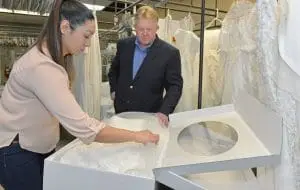
A professional pressing service is not a single pass with a steam iron over the fabric. At Chicago Wedding Dress Cleaners, every gown goes through a structured process before leaving the premises.
The appointment begins with an inspection — the specialist examines the gown under proper lighting for hidden creases, fabric flaws, and any sections that need individual attention before pressing begins.
Fabric evaluation follows, identifying the specific fabric composition of each section of the gown so the correct temperature, pressure, and technique are applied to each area.
The gown is then pressed layer by layer — bodice, waist, skirt, train, and lining handled separately so nothing is compressed under the weight of another section during the process.
Optional pressing for the veil, sash, and gloves can be added at the same appointment, so the entire look is finished to the same standard. A final quality check confirms every pleat, fold, and seam is perfect before the gown leaves.
This level of individual attention is what separates professional pressing from anything achievable at home — and it is why the results show so clearly in photographs.
How cleaners handle delicate fabrics explains the specialist knowledge behind these decisions — fabric-safe technique is not guesswork, it is trained expertise applied consistently.
Keep the gown perfect until the ceremony
A pressed gown can develop new creases within hours if stored or handled incorrectly after the appointment.
Always hang the gown from the interior fabric loops at the waist — never from the shoulder seams, which distort under the weight of the fabric.
Keep it in a breathable fabric garment bag away from direct sunlight, humidity, and anything that might brush against it or knock it off the hanger.
Avoid folding the train or skirt over the hanger arm — drape the train carefully over a padded surface or loop it up using the train loops if the gown has them.
The fewer contact points between the pressed fabric and any surface, the less opportunity for new compression marks to form before the ceremony.
Wedding dress after the wedding guidance is equally relevant here — the same principles that protect a pressed gown before the wedding protect it in the hours after, before professional cleaning begins.
Helpful guidance:
These articles help you prepare your gown perfectly for the big day:
- Keep your wedding dress wrinkle-free — a full guide to wrinkle prevention from alteration through to the ceremony
- Wedding dress preservation cost — understanding the full cost of pre and post-wedding professional gown care
- Professional wedding dress cleaner — what sets a specialist apart from a standard garment service for bridal fabric
Expert Guidance:
For a complete guide to steaming and pressing your wedding dress — including fabric-by-fabric advice from bridal stylists and exactly what professional pressing achieves compared to home steaming — this expert wedding dress steaming guide from The Knot is one of the most thorough resources available for brides planning pre-wedding dress care.
FAQs
Is professional pressing before the wedding really necessary?
For most gowns — yes. Any dress with structure, volume, multiple layers of fabric, or a train benefits significantly from professional pressing.
How much does professional wedding dress pressing cost in Chicago?
Professional pressing typically costs between $75 and $250, depending on the gown’s complexity. Ball gowns and heavily layered dresses sit at the higher end.
Will my boutique press the dress after alterations?
Often yes — most boutiques press or steam the gown before you collect it after the final fitting. However, transporting home and storing in a garment bag after that point can create new crease marks.
Can I press my wedding dress at home myself?
Home pressing on bridal fabric carries real risk — the wrong temperature, pressure, or technique on delicate fabric can cause permanent damage.
What is included in Chicago Wedding Dress Cleaners’ pressing service?
The service includes initial inspection, fabric evaluation, layer-by-layer pressing using fabric-appropriate techniques, and a final quality check.
How long does professional pressing take?
Simple gowns take thirty to forty-five minutes. Full ball gowns with multiple layers of tulle or chiffon can take one to two hours.
Should the veil be pressed at the same appointment?
Yes — always. A beautifully pressed gown alongside a creased veil creates a visible contrast in photographs.
Call (331) 267-5100 or visit chicagoweddingdresscleaners.com for a free consultation. Free pickup and delivery throughout Chicagoland, Northwest Indiana, and Southeast Wisconsin.