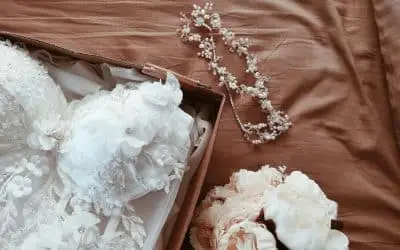

Every bride wants to walk down the aisle looking flawless — but keeping your wedding dress wrinkle-free on the big day takes more planning than most people expect.
Wrinkles do not just happen during travel. They develop during storage, after fittings, and even while getting ready on the morning of the wedding.
Here is exactly what to do at every stage to keep your gown looking picture-perfect from the first photo to the last dance.
Know your fabric before you do anything else
The single most important thing to understand is that different fabrics require completely different wrinkle treatments — and using the wrong method on the wrong fabric can cause permanent damage.
Polyester, chiffon, tulle, and most synthetic blends are the most forgiving. These fabrics respond well to steaming and are the easiest to smooth out without risk.
Satin and crepe are more structured and may need a combination of steaming and careful pressing with a low-heat iron and a pressing cloth to get truly smooth results.
Silk is the most demanding — never use a standard steamer directly on silk, as water droplets cause permanent spotting.
A pressing cloth between the iron and the fabric, set to the lowest heat, is the safer approach.
Lace, beading, and embellished sections should never be exposed to direct heat or steam.
The glue used to attach embellishments melts when heated, and lace can become permanently distorted if a steamer head comes too close. Understanding how to iron a wedding dress correctly for your specific fabric is essential before attempting to do so at home.
Professional pressing
The safest and most reliable way to keep your gown wrinkle-free is to schedule professional pressing two to four days before the wedding.
A professional presses each layer individually — bodice, skirt, train, and lining — using equipment and techniques appropriate to the specific fabric.
Every seam is pressed flat. Every layer of tulle or chiffon is smoothed separately.
The result is a level of precision that no home steamer can consistently achieve on a full bridal gown.
Two to four days before the wedding is the right window. Close enough that wrinkles will not reset significantly before you wear it, but with enough buffer time to address anything unexpected.
Getting creases out of a wedding dress professionally at this stage eliminates the stress of last-minute fixes on the morning of the wedding, which is exactly when you do not need another thing to worry about.
Chicago Wedding Dress Cleaners offers free pickup and delivery across Chicagoland, so the gown never has to be folded into a car for transport before or after pressing.
Store the gown after pressing to prevent new wrinkles
Pressing means nothing if the gown develops new wrinkles before the ceremony.
How you store it between pressing and wearing it directly affects how it looks when you put it on.
Hang the gown on a padded hanger immediately after pressing — always from the interior fabric loops sewn into the waist, not from the shoulder seams.
The weight of a full bridal gown can stretch the shoulder seams and distort the bodice when hung incorrectly. Keep it in a breathable fabric garment bag, never plastic. Store it in a cool, dry room, away from direct sunlight, humidity, and anything that might brush against or knock it.
Wedding dress wrinkling after pressing almost always comes down to how the gown was stored and handled in the hours and days that followed — not the pressing itself.
If the gown has a long train, do not let it pool on the floor while hanging. Drape the train over a padded hanger or lay it flat on a clean surface to prevent compression creases along the hem.
The bathroom steam trick
For very minor wrinkles on a gown that does not need full professional pressing, the bathroom steam method works on many fabrics.
Hang the dress on the back of the bathroom door, run the hottest shower possible with the door closed, and leave the gown in the steamy room for twenty to thirty minutes.
Gravity and humidity work together to release light surface wrinkles without any direct heat contact.
This method works well for polyester, chiffon, and light tulle but is not reliable for heavily structured gowns, satin, or any fabric that holds deep compression creases from storage.
It is a useful emergency option — not a substitute for professional pressing on a complex gown.
Removing creases from a wedding dress without a steamer covers additional home alternatives for different fabric types when professional equipment is not available.
What to do and what to avoid
The morning of the wedding is not the time for major wrinkle treatment. If the gown needed significant attention, it should have been addressed two to four days earlier.
Morning touch-ups are for minor issues only — a small section of tulle that compressed during transport, a slight crease along the hem from hanging.
If a touch-up is needed, use a handheld steamer with distilled water only.
Tap water contains minerals that leave white spots on white and ivory fabric — distilled water eliminates that risk entirely. Hold the steamer head six to ten inches from the fabric and move in slow downward strokes.
Always steam from the inside of the fabric rather than the outside surface. Never steam while someone is wearing the dress — the steam temperature is high enough to cause burns through fabric.
Here are the most important morning-of rules to follow:
- Assign one person — a bridesmaid or coordinator — to manage the dress throughout the morning; do not leave it unattended on the floor or crumpled across a chair
- Keep the gown on its padded hanger until the last possible moment before putting it on
- Step into the dress rather than pulling it over your head — this protects both the gown and your hair and makeup
- Assign someone to manage your train during the ceremony and reception so it is not dragged or stepped on
How to hang a strapless dress correctly on the morning of the wedding is worth knowing too — a strapless gown left on the wrong hanger for even an hour will develop bodice creases that are difficult to address quickly.
Traveling with your gown
For Chicago brides traveling to a destination wedding or moving between venues on the day, transportation is one of the biggest risk factors.
A gown folded into a bag for even thirty minutes in a car can develop deep compression creases that take significant time to address.
The best approach is to lay the gown flat across the back seat of the car, supported along its full length.
If the car is not large enough, hang it from the grab handle above the rear passenger door using a sturdy padded hanger — never a wire hanger. Avoid the boot entirely unless the gown is in a rigid garment box designed for transport.
For destination weddings that involve flights, contact the airline in advance about securing space in the cabin for a wedding gown bag. Most airlines accommodate this request when notified in advance.
A professional pressing appointment at your destination is always the safest conclusion to any journey with a bridal gown — and well worth booking in advance.
Spot-cleaning guidance for your wedding dress is also useful to have on hand during travel for handling any minor marks that occur before the ceremony.
Helpful Information:
These articles will help you care for your gown before, during, and after the wedding:
- How to get creases out of a wedding veil — the veil needs the same attention as the gown before the ceremony
- Best way to preserve your wedding dress — what to do with the gown immediately after the wedding day
- What is wedding dress preservation — understanding the full post-wedding care process before you need it
Expert Guidance:
For a complete fabric-by-fabric guide to steaming and pressing wedding gowns — including which fabrics to avoid steaming entirely and how to handle embellished sections safely — this expert bridal care guide from Brides covers every scenario with professional input from bridal stylists across the country.
FAQs
When should I get my wedding dress professionally pressed?
Two to four days before the wedding is the ideal window. This is close enough that wrinkles will not reset significantly before the ceremony, but it leaves buffer time to address anything unexpected before the wedding morning arrives.
Can I steam my wedding dress at home?
Yes — on most synthetic fabrics like polyester, chiffon, and tulle. Always use distilled water, hold the steamer six to ten inches from the fabric, and steam from the inside.
What is the bathroom steam method, and does it work?
Hanging the gown in a steam-filled bathroom while running a hot shower helps smooth minor surface wrinkles in many fabrics through gravity and humidity.
How do I transport my wedding dress without creating new wrinkles?
Lay it flat across the back seat of a car or hang it from the grab handle on a sturdy, padded hanger. Never fold it into a bag or place it in the boot.
What if my dress gets wrinkled on the morning of the wedding?
Use a handheld steamer with distilled water for minor touch-ups only. Hold it six to ten inches from the fabric, steam from the inside in slow downward strokes, and never steam while the dress is being worn.
Does pressing damage a wedding dress?
Professional pressing using the correct equipment and technique for the specific fabric does not damage a gown.
Should the veil be pressed at the same time as the dress?
Yes — always. A pressed gown next to a creased veil creates a visible contrast in photos. Have both pressed at the same appointment, so everything looks polished and consistent together on the day.
Call (331) 267-5100 or visit chicagoweddingdresscleaners.com for a free consultation. Free pickup and delivery throughout Chicagoland, Northwest Indiana, and Southeast Wisconsin.