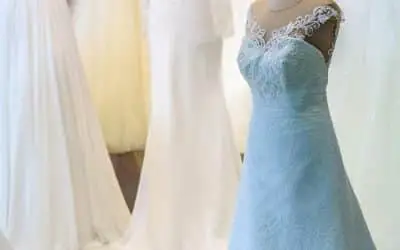

Every wedding dress is different. A silk ball gown with a cathedral train requires completely different care than a chiffon sheath with a lace overlay.
A heavily beaded bodice needs a different approach than a simple satin column dress. Chicago Wedding Dress Cleaners understands this — and it is the foundation of everything the team does.
Over 35 years of specialist gown care has produced a process that treats every fabric individually, every embellishment carefully, and every gown with the attention it deserves.
No two dresses are handled the same way. That is the point.
A fabric-specific care plan
Before any cleaning solution touches the fabric, Chicago Wedding Dress Cleaners creates a fabric-specific care plan for each gown. This begins with a thorough inspection that identifies the exact materials used in the dress — primary fabric, lining, structural components, and all embellishments.
Delicate fabrics require fundamentally different chemistry and handling. What is safe to use on polyester can permanently damage silk.
What is appropriate for satin is wrong for chiffon. A specialist who applies the same treatment to every dress is not a specialist at all.
The care plan ensures that every decision made during cleaning — which solutions are applied, which areas are treated by hand, how the gown is finished — is driven by the specific needs of that particular dress.
This is what separates Chicago Wedding Dress Cleaners from a general dry cleaner, applying a standard process to every garment that comes through the door.
What does the inspection cover?
Every gown arrives and is examined from top to bottom under proper lighting.
The inspection identifies:
- Fabric type across every section of the dress — bodice, skirt, train, and lining
- All embellishments — beading, sequins, crystals, lace appliqués, metallic threading, and embroidery
- Visible stains and their likely source — food, makeup, wine, grass, or dirt
- Invisible staining zones — underarms, neckline, hemline, and bodice, where residue absorbs during the wedding day
- Any existing damage — loose beads, fragile lace, weakened seams — that requires protective care during cleaning
Only once the full picture is established does the cleaning process begin.
How is each delicate fabric treated?
Bridal gowns combine some of the most sensitive fabrics in the textile world. Each one responds differently to cleaning chemistry, water, heat, and mechanical contact.
Chicago Wedding Dress Cleaners treats every fabric according to its specific needs — not a general approach that’s safe enough for most things.
Silk
Silk is the most delicate and most valuable bridal fabric. It loses its natural sheen when exposed to harsh solvents, shrinks when exposed to excessive water, and develops watermarks when moisture dries unevenly.
Chicago Wedding Dress Cleaners uses gentle, fabric-safe solutions that lift stains from silk without disturbing the protein fiber structure that gives it its characteristic luster.
A silk wedding dress cleaned correctly emerges with the same sheen and drape it had on the wedding day.
Satin
Satin attracts body oils and surface marks, which can create dull patches if treated incorrectly.
The fabric’s characteristic sheen comes from its weave structure — aggressive cleaning or the use of incorrect solvents can permanently flatten that structure. A satin wedding dress receives careful hand processing to restore its original luster without disturbing the weave.
Chiffon and Organza
Chiffon and organza are among the lightest and most delicate bridal fabrics. They are prone to watermarks, distortion under agitation, and snags from careless handling.
These fabrics are cleaned with controlled, targeted methods — never submerged, never agitated mechanically, and never treated with solutions not specifically suited to their fiber composition.
Lace
Lace — whether French, Chantilly, or Alençon — requires individual attention wherever it appears on the gown. It frays under agitation, stretches when unsupported, and can be permanently distorted by incorrect handling.
Each lace section is assessed separately, treated with targeted care, and supported throughout the cleaning process to maintain its structure.
Beading, sequins, and embroidery
Metal-backed sequins tarnish. Adhesive-backed beads loosen. Hand-sewn embroidery distorts. Metallic threading bleeds color into the surrounding fabric when exposed to the wrong chemistry.
Every embellishment on a gown is assessed individually before cleaning begins — and each one is protected throughout the process with methods appropriate to its specific construction.
Hand processing
The most important part of how Chicago Wedding Dress Cleaners handles delicate fabrics is hand processing.
This is the labor-intensive pre-cleaning step where specialist solutions are worked into the fabric by hand — gently, carefully, and with full awareness of what the fabric beneath will and will not tolerate.
Hand processing removes surface oils, embedded dirt, and stain residue that a machine cycle alone would miss or damage the fabric trying to reach.
It is how underarm stains on silk are addressed before they have the chance to be driven deeper by mechanical agitation.
It is how the hemline of a gown worn at an outdoor Chicagoland wedding is carefully cleared of embedded soil without distorting the layers of tulle beneath.
As many hand processing cycles as needed are completed to achieve an excellent result. This is not a single-pass process. It is repeated until the gown meets the standard — regardless of how long that takes.
Finishing and pressing for every fabric type
Once cleaning is complete, every gown is finished and pressed using methods appropriate to its specific fabric. This is not a one-temperature iron applied across the whole dress.
Silk and chiffon require low-heat steaming that restores shape without scorching. Satin requires careful pressing that revives its sheen without flattening the weave. Tulle layers are re-fluffed and shaped to restore the gown’s original silhouette.
Removing creases from a wedding dress safely requires specialist equipment and trained hands — not a domestic iron applied to a delicate fabric and hoping for the best.
Chicago Wedding Dress Cleaners finishes every gown to the same standard to which it was cleaned — thoroughly, carefully, and without shortcuts.
Different fabrics receive different finishing treatments:
- Silk and chiffon — low-heat steaming that restores shape and drape without scorching or flattening the fiber
- Satin — careful pressing that revives its characteristic sheen without disturbing the weave structure
- Tulle and layered skirts — re-fluffed and shaped by hand to restore the gown’s original volume and silhouette
- Lace sections — steamed gently with support underneath to prevent stretching or distortion during finishing
- Embellished areas — avoided with direct heat; finished around carefully to protect beads, sequins, and crystals
Museum-quality preservation
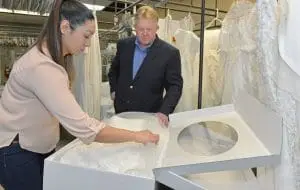
After cleaning and finishing, every gown preserved by Chicago Wedding Dress Cleaners is carefully folded with acid-free tissue and placed in a museum-quality archival box that breathes.
This is the same preservation standard used by textile museums to protect irreplaceable historic garments — and it is the only packaging method that genuinely protects delicate bridal fabrics over decades.
Plastic shrink-wrap is never used. Ordinary cardboard is never used. Every material that touches the cleaned gown is pH-neutral and acid-free.
The result is a gown that remains protected from yellowing, moisture damage, and fabric deterioration for as long as it is stored correctly. You can read more about the best way to preserve a wedding dress and why packaging materials matter so much for long-term results.
Every step of the preservation process is deliberate:
- Acid-free tissue paper — placed between every fold to prevent fabric-to-fabric contact and pressure marks
- pH-neutral archival box — protects the gown from light, air, humidity, and environmental exposure
- Breathable packaging — allows airflow so moisture cannot build up inside the box over time
- No plastic shrink-wrap — ever; plastic traps moisture and accelerates yellowing
- No ordinary cardboard — standard boxes contain acids that transfer into fabric over months and years
Visit to Explore More:
Expert Guidance:
Brides.com’s wedding dress fabric guide covers how different bridal fabrics behave and what care they require to stay in excellent condition after the wedding day.
FAQs
Does Chicago Wedding Dress Cleaners handle silk gowns?
Yes. Silk is one of the most common and most delicate bridal fabrics. Every silk gown receives a fabric-specific care plan before cleaning begins, using gentle solutions that protect the natural fiber structure and preserve the fabric’s sheen throughout the process.
Can heavily beaded wedding dresses be cleaned safely?
Yes. Every embellishment on a gown is assessed individually before any cleaning solution is applied. Beads, sequins, crystals, and embroidery are protected throughout the cleaning process using methods appropriate to their specific construction.
What happens to lace during professional cleaning?
Lace is handled with individual attention wherever it appears on the gown. It is never agitated mechanically or subjected to methods that would cause it to fray, stretch, or distort.
How does hand processing protect delicate fabrics?
Hand processing involves gently applying specialist solutions to specific areas of the gown before the main cleaning cycle begins.
Is chiffon safe to clean professionally?
Yes. Chiffon is cleaned using controlled, targeted methods that avoid mechanical agitation, uncontrolled water exposure, and incorrect solvents.
Will the dress look different after cleaning?
It should look better. Professional cleaning removes the stains, oils, and residue that accumulated during the wedding day and restores the gown to its original appearance.
Does Chicago Wedding Dress Cleaners clean vintage gowns?
Yes. Vintage fabrics are often more fragile than modern bridal materials and require even more careful assessment before cleaning begins.
What finishing is done after cleaning?
Every gown is pressed or steamed using methods appropriate to its specific fabric. Silk and chiffon receive low-heat steaming.
How can I know the cleaning results are good before I receive my dress?
Chicago Wedding Dress Cleaners sends photos of every cleaned gown to the customer before it is boxed and returned.
How do I arrange cleaning for my wedding dress in the Chicagoland area?
Call (331) 267-5100 or visit the website. Free pickup and delivery are available throughout Chicagoland, Northwest Indiana, and Southeast Wisconsin.
Call (331) 267-5100 or visit chicagoweddingdresscleaners.com for a free consultation. Free pickup and delivery throughout Chicagoland, Northwest Indiana, and Southeast Wisconsin.