Every bride who has just returned from her honeymoon faces the same temptation.
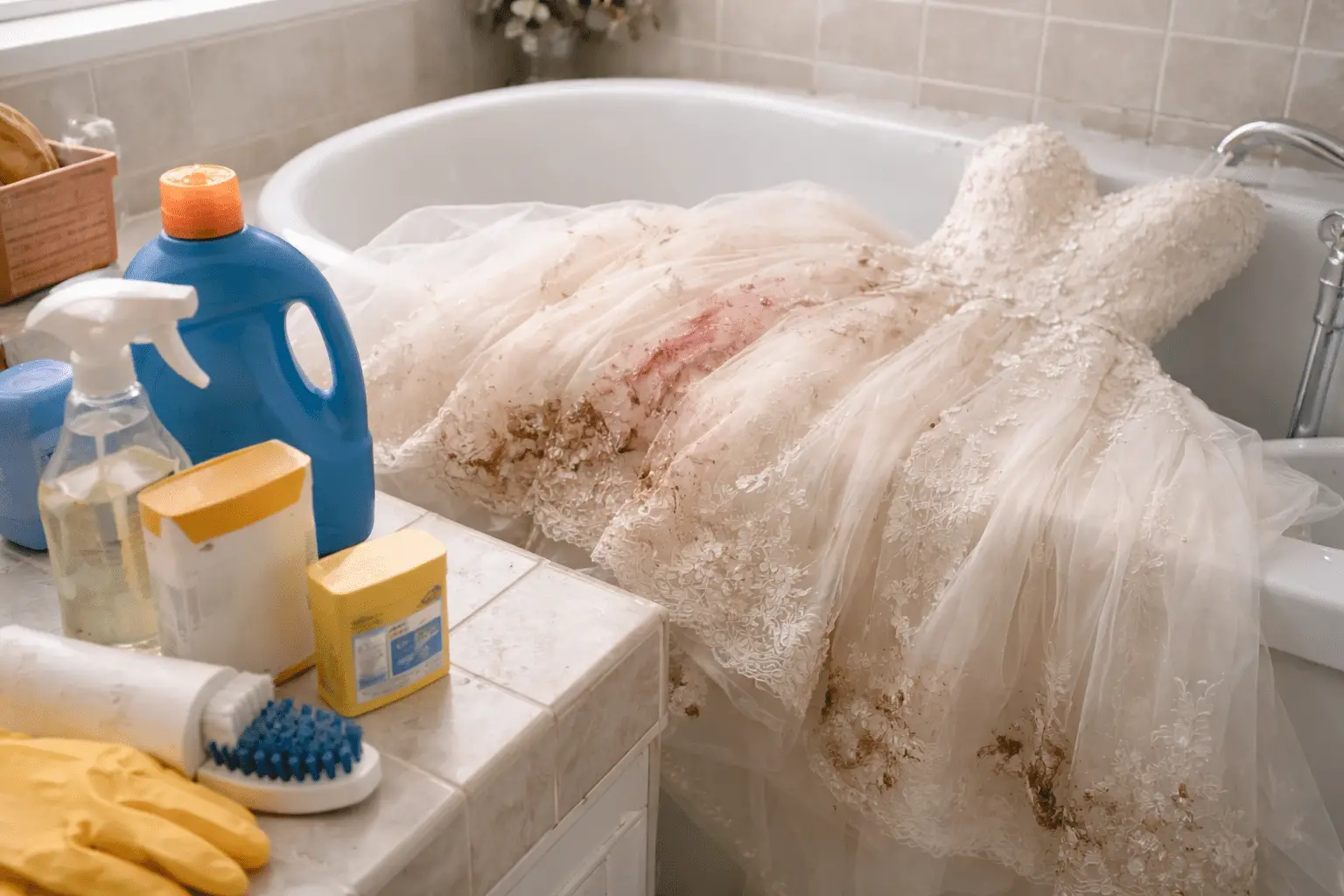
The dress is hanging there; it looks mostly fine, and a quick Google search produces dozens of tutorials promising easy results with household products.
It feels logical. It feels like a money-saving move. It is neither. Cleaning a wedding dress at home is one of the riskiest decisions a bride can make — and the damage it causes is often permanent.
Here are five clear reasons to step away from the bathtub and call a professional instead.
Your gown survived the wedding day. Do not let a DIY attempt ruin it.
Reason 1
Wedding gowns are not made from the same materials as everyday clothing. Silk, chiffon, organza, tulle, and lace behave completely differently when exposed to water, heat, and common detergents.
Household stain removers are formulated for durable fabrics like cotton and polyester — not for the delicate fiber structures found in bridal gowns.
Applying the wrong product to silk can permanently strip its natural sheen. Submerging a chiffon gown in water can cause the fabric to shrink, distort, or lose its structure entirely.
Even plain water leaves visible rings on certain fabrics when it dries — rings that a professional may not be able to remove afterward.
Silk loses its sheen permanently
Silk is one of the most sensitive bridal fabrics. Water and harsh chemicals break down the protein fiber structure that gives silk its luster. Once that sheen is gone, it cannot be restored. A silk wedding dress requires specialist chemistry and handling — not a household solution.
Satin develops watermarks
Satin reacts to uneven moisture exposure by developing dull patches and watermarks that are extremely difficult to treat after the fact. A satin gown cleaned at home almost always comes out worse than it went in.
Lace and tulle distort under agitation
Scrubbing or machine-agitating lace causes it to fray, stretch, and lose its shape. Tulle layers can clump together permanently. Both materials require a level of gentle, controlled handling that no home washing method provides.
Reason 2
The instinct to scrub a stain is understandable, but almost always counterproductive on a wedding dress. Rubbing pushes the pigment deeper into the fiber, making it harder — and sometimes impossible — to remove later.
Wine stains scrubbed at home become set stains. Makeup rubbed from a neckline spreads sideways and bonds with the surrounding fabric.
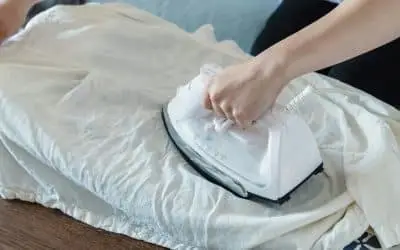
Heat makes this worse. Applying a hair dryer to a damp stain permanently locks it into the fabric. Certain incorrect detergents discolor ivory and white fabrics, leaving the area you tried to clean looking worse than the original stain.
Professional cleaners consistently report that the most common reason a stain becomes permanent is a well-meaning home treatment applied before the stain reaches a specialist.
The risks of cleaning a wedding dress at home are well documented — and the result is almost always a dress that is harder to restore than if nothing had been done at all.
Spot cleaning spreads the problem
Applying any liquid to a localized stain without the right supporting chemistry causes it to spread outward as it dries. What starts as a small wine mark can become a large, irregular patch on delicate silk or chiffon after a home spot-clean attempt.
Wrong products set stains permanently
Baking soda, vinegar, club soda, and dish soap — all commonly recommended in DIY tutorials — are not formulated for bridal fabrics. These products can chemically set stains in the fiber, making professional removal significantly more difficult or even impossible.
Reason 3
The most damaging stains on a wedding dress are the ones you cannot see.
Champagne, white wine, perfume, and body oils dry clear and leave no visible mark immediately after the wedding day. But they begin oxidizing within 24 to 48 hours, and within weeks or months, they turn into yellow or brown patches that spread through the fabric.
A home cleaning attempt addresses only what you can see. It completely misses the invisible residue that causes the most long-term damage.
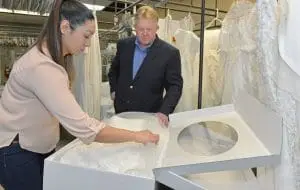
Professional wedding dress cleaning begins with a thorough inspection to identify every stain — visible and invisible — before any cleaning solution is applied.
At Chicago Wedding Dress Cleaners, every gown is inspected under proper lighting across every area that absorbed residue during the wedding day — underarms, neckline, hemline, bodice, and train.
Invisible stains are identified and treated before the main cleaning cycle begins. That step simply cannot happen at home.
Reason 4
Beads, sequins, crystals, metallic threading, and lace appliqués are all vulnerable to water exposure, heat, and mechanical agitation.
Submerging a heavily embellished gown in a bathtub can cause beads to loosen and fall, sequins to tarnish, metallic threading to bleed color onto surrounding fabric, and hand-sewn embroidery to distort.
Even professional cleaners work carefully around embellishments — assessing each one before cleaning and using targeted methods that protect delicate details throughout the process.
A home cleaning attempt applies the same treatment everywhere, with no knowledge of how each material responds and no ability to protect vulnerable areas individually.
What spot cleaning actually means for a wedding dress is very different from what most brides imagine — and understanding that difference is the first step toward protecting the dress properly.
Beads loosen and fall
Water weakens the adhesive and threading used to attach beads and sequins. A gown submerged at home can lose embellishments during the cleaning process — and replacing hand-sewn beadwork is expensive, time-consuming, and rarely a perfect match.
Metallic threading bleeds color
Gold and silver metallic threads react with water and household detergents, releasing dye into the surrounding fabric.
The result is an irreversible grey or brown tint spreading outward from the embellishment — visible damage that no professional can fully reverse.
Reason 5
Even if a home cleaning attempt produces an acceptable result on the surface, what happens next is equally important.
Many brides who clean their dress at home then store it in a plastic garment bag, a regular cardboard box, or a sealed container — all of which actively damage the gown over time.
Plastic traps moisture and creates the ideal conditions for yellowing, mildew, and fabric deterioration. Regular cardboard boxes contain acids that transfer to fabric over months and years.
Hanging the dress causes structural stress on the bodice and straps. Without acid-free wedding dress storage, even a perfectly cleaned dress begins to degrade within months.
Professional cleaning and preservation address both steps together. At Chicago Wedding Dress Cleaners, every preserved gown is carefully folded with acid-free tissue and placed in a museum-quality archival box that allows the fabric to breathe — the same standard used by textile museums for irreplaceable garments.
That level of post-cleaning care is the only thing that genuinely protects a gown for decades.
Brides across Naperville, Wheaton, Plainfield, and Oak Brook trust Chicago Wedding Dress Cleaners with their gowns because the result speaks for itself — a professionally cleaned, beautifully preserved dress returned with photos, handled with 35 years of specialist experience, and never outsourced to a factory.
Free pickup and delivery are available throughout Chicagoland — making professional care the easiest choice, not just the smartest one.
Useful Information:
Further Information:
Brides.com’s wedding dress care guide covers what brides should and should not do with their gown after the wedding day, and why professional cleaning is always the recommended route.
FAQs
Can I hand-wash my wedding dress at home?
Hand washing is not recommended for wedding gowns. Even gentle handwashing in cold water risks shrinking the fabric, distorting lace, loosening beads, and leaving watermarks on silk or chiffon.
What happens if I use the wrong cleaning product on my dress?
Using the wrong product can set stains permanently, discolor ivory or white fabric, strip the sheen from silk, and cause metallic threading to bleed color into surrounding areas.
Is it safe to put a wedding dress in the washing machine?
No. Machine agitation can damage delicate bridal fabrics and embellishments. The mechanical movement causes lace to fray, beads to loosen, tulle to clump, and fabric structure to distort.
What if my dress only has a small stain?
Leave it to a professional. Small stains treated incorrectly at home often become larger, harder-to-remove problems.
How do professionals safely clean embellished wedding dresses?
They assess every embellishment individually before cleaning begins. Vulnerable areas are protected during the cleaning process.
Will a dry cleaner’s mistake ruin my dress permanently?
A trained specialist with experience in bridal gowns works carefully to avoid any damage. The risk of damage is far higher with home cleaning than with professional cleaning, which has the right equipment, chemistry, and expertise.
My dress looks clean — do I still need professional cleaning?
Yes. The invisible stains from champagne, sweat, body oils, and perfume are not visible immediately but cause serious damage over time.
What is the safest way to store a wedding dress after the wedding?
The safest approach is professional cleaning followed by museum-quality preservation in an acid-free, breathable archival box.
How much does professional wedding dress cleaning cost compared to DIY?
Professional cleaning typically costs between $150 and $400, depending on the gown. Home cleaning products cost far less upfront — but the cost of repairing or replacing a damaged gown far exceeds any savings.
How do I schedule cleaning with Chicago Wedding Dress Cleaners?
Call (331) 267-5100 or visit the website. Free pickup and delivery are available throughout Chicagoland, Northwest Indiana, and Southeast Wisconsin.
Call (331) 267-5100 or visit chicagoweddingdresscleaners.com for a free consultation. Free pickup and delivery throughout Chicagoland, Northwest Indiana, and Southeast Wisconsin.