
Wearing heirloom gowns on your wedding day connects you to the women who came before you in the most personal way possible.
More Chicago brides are choosing to walk down the aisle in a mother’s or grandmother’s dress — not as a budget decision, but as a deeply intentional one.
With the right preparation, a vintage gown can look as stunning as anything new on a boutique rail.
Why heirloom gowns are having a major moment
The trend is real and growing. Sustainability, rising dress costs, and a cultural shift toward meaningful over brand-new are all pushing brides toward family wardrobes rather than bridal boutiques.
A gown worn by your mother in 1985 or your grandmother in 1962 carries craftsmanship that modern mass-produced dresses cannot replicate — hand-stitched lace, peau de soie, silk organza, and construction techniques that no longer exist in fast fashion bridal.
Beyond fabric quality, there is an emotional dimension that no new dress can offer. Wearing a gown with a family history adds a layer of meaning to the ceremony itself — something borrowed becomes something deeply felt.
The history of wedding gowns and their styles shows just how dramatically bridal fashion has shifted over the decades, making each era’s gown a genuine artifact worth preserving and celebrating.
The first step — assess the gown’s condition honestly
Before any alteration or styling decisions are made, the heirloom gown needs a thorough condition assessment.
Vintage fabrics age in ways that are not always visible to the naked eye — seams weaken, silk becomes brittle, and lace grows fragile over decades of storage. A gown that looks intact may have internal structural issues that only a trained bridal specialist can identify.
Yellowing is one of the most common issues Chicago brides encounter with older gowns. Untreated stains from the original wedding day — champagne, body oils, floral dye — oxidize over time, turning white and ivory fabrics yellow or brown.
Restoring a yellowed wedding dress is often the first professional step before any sewist touches the gown for alterations. Skipping this stage and altering a dirty or yellowed dress risks permanently locking stains into the fabric once the seams are cut and repositioned.
Seamstresses modernize a vintage gown without losing its soul
The goal of modernizing an heirloom dress is never to erase its history — it is to make it wearable and personal for a new bride. Skilled sewists work collaboratively with brides to identify which elements are non-negotiable and which can be updated.
A 1970s puff sleeve might be slimmed rather than removed entirely. A high Victorian neckline might be softened into a subtle scoop without eliminating the original lace trim.
Common updates include reshaping the neckline, shortening or removing sleeves, adjusting the hem length, adding internal support structures, and updating the silhouette while keeping original fabric panels intact.
One bride kept her grandmother’s 1960s lace bodice exactly as it was, removed the long sleeves, and paired the top with a new soft A-line chiffon skirt — the result honored the original gown while feeling entirely her own.
If you want to explore what is possible before committing to full alterations, creative ideas for your wedding dress can help you think through every option available.
Popular modernization updates:
Neckline reshaping
Softening a high neckline or adding an illusion panel can dramatically update the silhouette while preserving the original lace or fabric around it.
Sleeve transformation
Removing, slimming, or converting long sleeves into delicate cap sleeves is one of the most common updates — it modernizes the look while keeping the fabric in the gown.
Hem and train adjustment
Shortening a cathedral train to a sweep or chapel length makes the dress easier to wear and more suited to contemporary venues and receptions.
Silhouette restructuring
Adding internal boning, a new lining, or restructuring the waist gives older gowns the support and fit that modern brides expect without altering the exterior design.
Cleaning before and after the wedding
Cleaning a vintage gown requires specialist knowledge that goes well beyond standard garment care. Older fabrics — silk, satin, organza, and fragile lace — react differently to cleaning agents than modern synthetics.
The wrong approach can cause irreversible damage: shrinkage, color bleed, or lace disintegration. Chicago brides should always seek a professional with specific experience in vintage and bridal fabric before attempting any home treatment.
Getting underarm stains out of silk is one of the most requested services for heirloom gowns, since perspiration stains from the original wedding day are among the most stubborn to treat on aged fabric.
After your own wedding, the gown needs cleaning again before storage or passing it on. Understanding what spot cleaning means helps you handle minor incidents on the day without damaging delicate vintage fabric until a professional can properly treat the entire gown.
Storing and preserving the gown
Once you have worn the heirloom gown, its preservation becomes your responsibility — for your own memories and for the next generation.
The same care that kept it wearable across decades must continue. Acid-free wedding dress storage is essential for vintage fabric — standard plastic bags trap moisture and accelerate yellowing. In contrast, acid-free tissue and archival boxes protect fabric at a molecular level.
Chicago’s humid summers and cold winters create real storage challenges for delicate vintage fabric. Avoid attics, basements, and anywhere with fluctuating temperatures.
A climate-stable bedroom space with a breathable garment cover is far safer. If the gown has sentimental value beyond your own wedding — meaning you hope to pass it to a daughter or niece — professional heirloom gown preservation in Chicago offers the best chance of it surviving another generation in wearable condition.
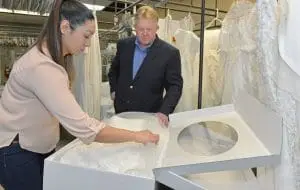
Proper preservation boxing after a professional clean is the single most important step you can take at this stage.
What to include:
Professional cleaning first
Always clean before boxing. Invisible stains left in storage oxidize, causing permanent yellowing — even on fabric that looks clean to the eye.
Acid-free tissue wrapping
Every fold in the gown should be cushioned with acid-free tissue to prevent permanent crease lines from forming in the delicate fabric during storage.
Climate-stable storage location
Avoid attics and basements. A cool, dry, and dark interior space with consistent temperature is essential for long-term fabric health.
Gown’s history
Write down the original wearer, the year, and any known details about the dress’s origins. This documentation becomes part of the heirloom for future generations.
Passing the gown forward
If you intend to pass the heirloom gown to a future generation, the post-wedding care you give it now determines whether that is actually possible. A gown boxed without cleaning will deteriorate. A gown stored in plastic will yellow.
A gown folded without acid-free tissue will develop permanent crease damage along every fold line. The work you do in the weeks after your wedding directly shapes the options available to the next bride who wears it.
Consider having the gown professionally assessed and re-preserved every ten to fifteen years, particularly if storage conditions change. Storing a wedding dress for two or more years requires active maintenance — not just putting it in a box and forgetting it.
Chicago Wedding Dress Cleaners offers free pickup and delivery across Chicagoland, making the preservation process straightforward for brides who want to protect a family gown without the hassle of transporting delicate vintage fabric themselves.
Quick tip: Before booking a sewist for alterations, always have the heirloom gown professionally cleaned and assessed first. Cutting into a fragile or stained vintage fabric without treating it first can cause irreversible damage — and close off options you did not even know you had.
Helpful Guidance:
These articles will support every stage of caring for your heirloom gown:
- How to clean a wedding dress at home in Chicago — what is safe to attempt at home, and what requires a professional
- Best way to preserve your wedding dress — a full breakdown of preservation options for gowns of every age
- Wedding dress preservation kit — what a proper preservation kit includes, and whether it suits vintage fabric
Expert advice worth reading:
For a deeper look at the emotional and practical side of wearing a family gown, this guide to heirloom wedding dresses from Brides covers real bride stories, modernization tips, and expert seamstress advice from across the country.
FAQs
Can any vintage heirloom gown be altered to fit a modern bride?
In most cases, yes. Skilled sewists can accommodate significant size differences — sometimes up to ten sizes — depending on how much fabric and seam allowance exists in the original construction.
How far in advance should I bring an heirloom gown to a sewist?
Start at least six to nine months before the wedding. Vintage fabric requires extra time and patience — assessments, cleaning, structural reinforcement, and alteration fittings all take longer than standard bridal work.
Does an heirloom gown need cleaning before alterations?
Always. Cleaning removes invisible stains, body oils, and oxidation that would be permanently locked into the fabric once seams are cut.
What if the heirloom gown is too yellowed to restore?
Professional cleaning can treat significant yellowing in most cases, particularly when the gown has been well stored.
Can I incorporate just part of the heirloom gown into a new dress?
Absolutely. Many brides use original lace panels, buttons, beading, or trim from a family gown and have them incorporated into a new design.
What is the difference between altering and restoring a vintage gown?
Alterations focus on fit and style updates — resizing, reshaping necklines, adjusting sleeves. Restoration addresses age-related damage — reinforcing seams, replacing missing lace, treating stains, and stabilizing fragile fabric. Most heirloom gown projects involve both.
How do I know if the vintage fabric is too fragile to wear?
A professional assessment before any work begins will answer this. A specialist checks seam strength, fabric integrity, and potential tear areas under the stress of wear.
Should I clean the heirloom gown after wearing it at my wedding?
Yes — immediately and professionally. Every stain from your wedding day, including body oils and invisible perspiration, will oxidize over time if left untreated.
Can a heirloom gown be worn by someone significantly taller or shorter than the original bride?
Yes. Hem length is one of the most straightforward alterations regardless of a gown’s age. Sewists can let down or take up hems on most vintage gowns, though heavily embellished hems with original lace trim require extra care and skill to adjust without losing detail.
How should I transport an heirloom gown to a sewist or cleaner?
Never fold it loosely into a bag or box. Use a breathable garment bag and lay the gown as flat as possible during transport. Avoid leaving it in a hot car.
Is it worth preserving the heirloom gown again after I wear it?
Without question. If the gown has been in the family across generations and you hope to pass it on, professional cleaning and proper preservation after your wedding are not optional — they are essential.
What should I do if the heirloom gown has missing buttons or broken fastenings?
Bring it to a specialist who works with vintage bridal fabric. Period-appropriate buttons and fastenings can often be sourced or carefully recreated.
Call (331) 267-5100 or visit chicagoweddingdresscleaners.com for a free consultation. Free pickup and delivery throughout Chicagoland, Northwest Indiana, and Southeast Wisconsin.