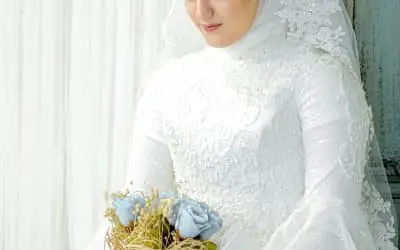

Spring is the most popular wedding season in Chicago, and an outdoor spring wedding ceremony brings unique challenges for a bridal gown that no indoor venue can create.
Unpredictable weather, morning dew on grass, wind off Lake Michigan, and early-season humidity all affect white and ivory fabric in ways that need planning well before the ceremony.
Here is exactly how to prepare your dress for everything spring can throw at it.
What does spring weather actually do to a wedding dress?
Spring in Chicago is genuinely unpredictable. A warm, sunny April morning can shift to a cool breeze by the ceremony and light rain by cocktail hour.
Brides who plan for this reality rather than the best-case forecast protect their gown far more effectively than those who assume good weather and react to problems on the day.
Morning dew on grass at outdoor venues is one of the most overlooked dress risks of the spring season. A hem that drags across dewy grass before the ceremony absorbs moisture that carries soil, plant pigment, and natural ground residue into the fabric fibers.
These stains are not always visible immediately, but they surface during storage as green-brown marks that are significantly harder to remove the longer they sit untreated.
Spot cleaning a wedding dress at home after outdoor contact covers what is safe to attempt before professional cleaning, and grass-related marks are firmly in the professional treatment category.
Fabric matters more in spring than in any other season
The right fabric for a spring outdoor ceremony is the fabric that works with the season’s conditions — not against them.
Lightweight, breathable fabrics are the practical choice for spring outdoor ceremonies and are also the fabrics most popular with Chicago brides for this reason.
Chiffon and soft tulle move beautifully in a spring breeze and keep the body comfortable across a long outdoor ceremony and reception.
They are breathable enough for the warmer side of spring but do not feel heavy or restrictive when temperatures are still unpredictable in March and April.
The trade-off is that lightweight fabrics catch the wind dramatically and snag easily on rough outdoor surfaces — gravel, rustic wooden decking, and even uneven stone aisle runners all pose a real snagging risk for tulle and chiffon hems.
Wedding dress cleaning for lightweight spring fabrics — chiffon, tulle, and lace — requires the same fabric-specific individual attention as any other bridal material.
Hem protection
The hem is the most exposed part of the dress at any outdoor ceremony, and spring conditions make hem protection more critical than at any other time of year.
Wet grass, soft ground, morning dew, and the general moisture of early-season outdoor settings all concentrate at the hemline throughout the ceremony and reception.
Here is what works and what does not:
- Aisle runner — the single most effective protection for the hem during the ceremony itself; a quality canvas or fabric runner creates a clean, dry surface for the walk that will be photographed most
- Dedicated train manager — assign one bridesmaid specifically to manage the train at all times during outdoor movement between ceremony and reception spaces; a cathedral train dragged across wet spring grass picks up significant soil and moisture with every step
- Bustle before cocktail hour — if the gown has a train, bustling it before stepping onto the reception lawn or terrace keeps the most vulnerable section of the hem off wet ground during the least controlled part of the day
Clean your dress within two weeks of the wedding — spring outdoor hemlines almost always carry more invisible staining than brides expect, regardless of how careful hem management was during the day.
Wind and veil management
Chicago’s spring wind is one of the most photographed bridal challenges of the season — and one of the most disruptive to dress management during an outdoor ceremony.
Lightweight fabrics that look graceful in a gentle breeze become genuinely difficult to control in a strong spring wind off Lake Michigan or across an open garden venue.
Dress weights — small adhesive tabs applied to the interior hem — anchor lightweight fabrics in moderate wind without any visible effect on the silhouette. Pack at least six in the emergency kit regardless of the forecast.
Static guard spray on the inside lining prevents synthetic skirt fabric from clinging to legs and hosiery as the day warms up — a common problem at outdoor spring receptions that transitions from cool morning ceremonies to warmer afternoon and evening receptions.
For the veil, secure the comb with additional pins beyond what the salon used for the fitting — spring wind dislodges veils more frequently than any other weather element.
How to get creases out of a wedding veil after wind-related distortion during the ceremony is a common post-ceremony request — having the veil professionally pressed alongside the dress two to five days before the wedding starts the day in the best possible condition.
Rain planning
Rain at a spring outdoor wedding is a genuine possibility in Chicago, and the brides who handle it best are the ones who planned for it weeks before the ceremony.
A clear umbrella is the most practical investment — transparent umbrellas provide real rain coverage without casting coloured shadows on the dress or the bride’s face in photographs. Pack one in the wedding day kit regardless of the forecast.
Confirm a covered indoor contingency option with the venue in writing before the wedding. Any outdoor ceremony space without a confirmed rain backup creates real risk — and discovering on the morning of the ceremony that the contingency plan is unclear adds significant stress to an already busy morning.
A fitted bridal jacket or cape protects the bodice and shoulders during movement between spaces in light rain while keeping the gown visible for photographs.
The question of whether wedding dress preservation is worth it as a post-wedding investment is answered most easily by spring outdoor brides — the range of conditions a gown faces on a single spring ceremony day makes professional care after the wedding more important, not less.
Post-ceremony care
Everything that happened to the gown during the ceremony and reception is still in the fabric when the dress comes off. Morning dew absorption at the hem. Pollen from floral arrangements.
Champagne from the first toast. Perspiration from a full day of warmth and movement. Floral dye from the bouquet contacts throughout the day.
None of this is visible immediately, and all of it causes permanent damage if left untreated in storage.
Chicago Wedding Dress Cleaners serves brides across the entire Chicagoland area — from North Shore garden venues in Glencoe and Lake Forest to DuPage County estates in Wheaton and Naperville — with free pickup and delivery so the gown never has to be transported at risk after a long spring outdoor wedding day.
Should you clean your dress after the wedding within two weeks is the recommendation that applies with particular urgency after a spring outdoor ceremony — the combination of dew, pollen, wind, and potential rain creates more invisible staining than almost any indoor wedding produces.
Helpful guidance:
These articles support spring outdoor brides from dress preparation through to post-wedding care:
- Outdoor wedding tips — protecting your dress from weather
- 5 wedding dress care tips for DuPage County brides
- Wedding dress after the wedding
Expert advice worth reading:
For a complete guide to preparing your wedding dress for an outdoor spring ceremony — including fabric selection, weather planning, and what professional care involves after the day — this complete outdoor wedding dress guide from Brides covers every scenario with expert input from bridal stylists and wedding planners.
FAQs
What is the biggest dress risk at a spring outdoor wedding in Chicago?
Invisible staining from dew, pollen, grass contact, and perspiration is the most significant risk — none of these are visible on the day, but all of them oxidize into permanent marks during storage without professional cleaning.
How do I protect my hem from wet grass during an outdoor spring ceremony?
Use a quality aisle runner for the ceremony walk, assign one bridesmaid to manage the train at all times during outdoor movement, and bustle the train before stepping onto the reception lawn.
Can pollen from floral arrangements stain a wedding dress?
Yes — pollen from lilies, roses, and other common spring wedding flowers settles on white and ivory fabric, creating yellow staining that deepens significantly during storage.
What fabrics work best for a spring outdoor wedding in Chicago?
Chiffon, soft tulle, and lace overlays on lighter base fabrics are the strongest choices for spring outdoor ceremonies.
Should I have my dress professionally pressed before a spring outdoor ceremony?
Yes — always. Two to five days before the wedding is the right window.
What should I do if it rains during my outdoor spring ceremony?
Use a clear umbrella during any movement between spaces. Gently blot surface moisture from the fabric with a clean, dry white cloth — never rub.
How does Chicago’s spring wind affect the wedding dress?
Wind at outdoor Chicago venues — particularly North Shore lakefront locations and open garden estates — can make lightweight fabrics like chiffon and tulle difficult to control.
Can grass stains be fully removed from a wedding dress after a spring outdoor wedding?
Yes — when addressed promptly by a professional. Grass stains treated within two weeks of the wedding respond well to specialist pre-treatment.
Should I use fabric protector spray on my dress before a spring outdoor ceremony?
Only on the hem and lower skirt of synthetic fabric sections — and only after testing on an inconspicuous area first.
How soon after a spring outdoor wedding should I have my dress cleaned?
Within two weeks — the same window that applies to any post-wedding cleaning, but with particular urgency after a spring outdoor ceremony.
Does Chicago Wedding Dress Cleaners serve spring outdoor wedding venues across Chicagoland?
Yes. Chicago Wedding Dress Cleaners serves brides across the entire Chicagoland area — from North Shore venues in Glencoe, Highland Park, and Lake Forest to DuPage County estates in Wheaton and Naperville — with free pickup and delivery.
What is the most important thing to do immediately after a spring outdoor wedding?
Hang the dress on a padded hanger in a cool, dry room as soon as you arrive home. Never leave it crumpled in a garment bag overnight.