The words gown restoration get used a lot — but few brides actually know what happens between dropping off a yellowed, stained dress and picking up something that looks like it just came off a boutique rack.
This article walks through the real before-and-after of professional restoration: what the gown looks like when it arrives, what changes at each stage, and what a genuinely well-restored dress looks like when the work is done.
A gown before restoration
Most gowns arrive for restoration in one of two conditions. The first is a recently worn dress — still largely white, but bearing invisible stains from the wedding day that the bride cannot yet see.
Champagne, body oils, and sugar from cake frosting sit in the fabric fibers and will turn brown over the coming months if left untreated.
The dress looks fine. It is not.
The second — and far more common — is a gown that has already been in storage for years or decades. These arrive visibly changed:
- The fabric has shifted from white or ivory to yellow, sometimes orange or brown, in the most affected areas
- Brown oxidation patches sit under the arms, along the hem, and across the bodice where skin contact was heaviest
- Fold lines have compressed into the fabric, leaving sharp crease marks that have set over the years of storage
- Lace edges have frayed or detached from the underlying fabric
- Beading has loosened or fallen away entirely from embellished sections
- The internal lining has yellowed or deteriorated faster than the outer fabric, sometimes pulling away from the seams
Restoring a yellowed wedding dress is achievable in the vast majority of cases, but only when the right sequence of steps is followed from the very beginning.
Stage one
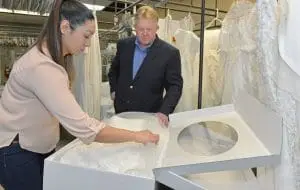
Before anything touches the gown, a specialist spends real time with it. This is not a quick glance and a price quote.
It is a methodical inspection under proper lighting that maps every stain, every area of fabric weakness, every loose embellishment, and every section where the lining has deteriorated.
This stage determines the entire approach.
The same yellow color on two different gowns may require completely different treatment — one caused by champagne oxidation that responds well to targeted pre-treatment, the other caused by plastic bag storage fumes that have reacted directly with the silk fibers and require a different process entirely.
A specialist who skips a thorough assessment and runs every gown through the same process is not doing restoration — they are gambling with someone else’s irreplaceable fabric.
Understanding what wedding dress preservation involves as a broader process helps brides know the right questions to ask before trusting any service with a family gown.
Stage two
Pre-treatment is where the visible transformation begins. Each stain area identified during the assessment receives individual attention — the right cleaning agent and technique for that specific stain type and that specific fabric.
A champagne stain on silk is treated differently from a grass stain on polyester hem fabric, which is treated differently again from an underarm perspiration stain on a lace overlay.
This stage takes longer than most brides expect, and that time is appropriate.
Rushing pre-treatment by applying a single product to all stain areas either leaves stains intact or damages the surrounding fabric.
Getting underarm stains out of silk — one of the most common and stubborn issues on stored gowns — requires patience, the right chemistry, and multiple gentle treatment cycles rather than a single aggressive application.
Stage three
The cleaning process for a restoration gown is not a standard wash cycle.
Every gown is cleaned according to its specific fabric composition — silk, satin, organza, tulle, cotton, polyester, and lace each responds differently to temperature, agitation, and cleaning solutions.
A process safe for polyester can cause silk to shrink or lose its sheen. The wrong temperature on vintage lace causes fibers to contract and distort permanently.
Here is how the cleaning stage differs across common bridal fabrics:
- Silk — the most delicate and the most demanding; hand-processed with cool water and specialist solutions, never agitated or wrung
- Polyester and synthetic blends — more forgiving; respond well to gentle wet cleaning that achieves significant brightening even on heavily yellowed fabric
- Lace overlays — cleaned separately where possible, supported throughout the process to prevent the open weave structure from distorting under water weight
- Beaded and embellished sections — handled with particular care; excessive moisture or temperature causes threads holding embellishments to weaken and release
- Satin and duchess fabrics — vulnerable to watermarks if not dried correctly; require controlled drying to prevent surface sheen from dulling or patching
Stage four
A clean gown is not necessarily a restored gown. Restoration addresses the physical damage that cleaning cannot fix — and this is where the skilled hands really matter.
Loose beads are reattached with thread that matches the original construction. Detached lace appliqués are secured back to the bodice or skirt using an appropriate technique for the specific lace type.
Frayed hem edges are stabilized or rebound. Seams that have split or weakened are reinforced from the inside so the repair is invisible on the surface.
Linings that have deteriorated beyond cleaning are replaced with appropriate fabric that supports the outer gown without showing through.
On vintage gowns, metal-backed and wood-core buttons are removed before cleaning — they rust and react badly to water-based processes — and either restored separately or replaced with period-matched alternatives that preserve the gown’s original character.
Heirloom gown preservation in Chicago involves exactly this level of repair work on family gowns, and the skill required is far above what a standard garment service can offer.
Stage five
A clean and repaired gown still needs pressing before it looks fully restored. Years of compression in storage leave crease lines set deep into the fabric — fold marks that do not disappear with cleaning alone.
Professional pressing using equipment and techniques appropriate to each fabric type removes these crease lines and restores the gown’s original drape and silhouette.
This stage alone transforms how the gown looks when held up.
The difference between a properly pressed restored gown and an unpressed one — even if both are equally clean — is significant.
Getting creases out of a wedding dress using professional equipment produces results that no amount of home steaming can replicate on a gown that has been folded in a box for a decade.
What the after looks like
A properly restored gown looks genuinely remarkable compared to what arrived.
White or ivory fabric that came in deeply yellow has brightened significantly — sometimes back to near-original white, sometimes to a clean, warm ivory that suits vintage fabric well.
Stains that were visible on arrival are gone or dramatically reduced. The silhouette is clean and pressed. Embellishments are secure. The fabric feels stable rather than brittle or fragile.
What honest restoration does not promise is perfection in every case. Silk that has been severely yellowed for over fifty years may not return to pure white.
A stain that penetrated deep into fragile vintage fibers may reduce without completely disappearing. Fabric that has thinned with age can be stabilized but not thickened.
A reputable specialist tells you upfront what is achievable for your specific gown — and delivers on that honest assessment rather than overpromising and underdelivering.
The before-and-after that matters most is not just visual.
A gown that arrives structurally fragile, carrying decades of chemical damage from oxidized stains and plastic storage fumes, leaves restored as a stable, preserved textile that can be worn, displayed, or passed forward.
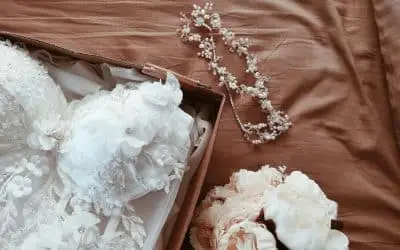
Storing the restored gown correctly afterward in acid-free archival materials protects everything the restoration achieved and gives the gown the best possible chance of surviving another generation.
Quick tip: Ask your restoration specialist to document the gown’s condition before work begins and share photos of the result before pickup. Chicago Wedding Dress Cleaners provides before-and-after documentation as standard — so you see exactly what the process achieved before the gown comes back to your door.
Helpful Guidance:
These articles take you through the full care journey before and after restoration:
- Best way to preserve your wedding dress
- Acid-free wedding dress storage
- Wedding dress preservation worth it
Expert advice worth reading:
For real before-and-after stories from brides who had family gowns professionally restored — including gowns that arrived in dramatically poor condition and came back transformed — this complete restoration and preservation guide from The Knot covers the full process with honest input from professional bridal care specialists across the country.
FAQs
How dramatic is the before-and-after difference with professional restoration?
For most gowns, the transformation is genuinely striking. Deeply yellowed fabric brightens significantly, visible stains disappear or dramatically reduce, crease lines are pressed out, and the overall silhouette is restored.
Can a gown that looks almost unwearable really come back?
In the vast majority of cases, yes. Even gowns stored for thirty or forty years with significant yellowing respond well to professional restoration treatment.
Will every stain be gone after restoration?
Most stains — including champagne, food, perspiration, and body oils — are fully removed or reduced to invisibility.
Does the gown look different after pressing compared to just cleaning?
Dramatically so. Cleaning removes staining and brightens the fabric. Pressing removes the compression creases and fold marks set into the fabric during years of storage, restoring the gown’s original drape and silhouette.
How long does the full restoration process take?
Most restoration projects take four to eight weeks from pickup to delivery.
Is the restored gown safe to wear again after the process?
Yes — a properly restored gown is structurally sound and safe to wear. The repair work specifically reinforces weakened areas, and the cleaning removes the chemical compounds that were actively degrading the fabric.
Can I see photos of my gown before and after restoration?
Yes. Chicago Wedding Dress Cleaners documents the gown’s condition before work begins and provides before-and-after photography before the gown is returned.
What happens to embellishments and beading during restoration?
Every embellishment is assessed during the initial inspection. Loose beads and detached elements are reattached as part of the restoration process.
Does restoration change the color of the fabric at all?
The goal of color restoration is to reverse yellowing and restore the fabric to its original color as closely as possible — not to change or dye it.
What is the difference between restoration and a standard post-wedding clean?
A standard post-wedding clean addresses fresh stains and surface soiling on a recently worn gown.
How should I store the gown after restoration to maintain the results?
In an acid-free archival box with lignin-free tissue paper cushioning every fold, stored in a climate-stable interior room away from attics, basements, and exterior walls.
Does Chicago Wedding Dress Cleaners provide restoration for gowns across all of Chicagoland?
Yes. Chicago Wedding Dress Cleaners serves the entire Chicagoland area, including Cook, DuPage, Kane, Lake, McHenry, Will, and Kendall counties, as well as Northwest Indiana and Southeast Wisconsin.