Most brides spend weeks deciding what to do with their wedding veil after the big day — and then quietly stuff it into a drawer and forget about it.
That is a mistake. Your veil is just as vulnerable to yellowing, fabric deterioration, and stain damage as your gown, and it deserves the same level of care.
The short answer is yes — preserve it, and do it quickly.
The veil gets overlooked.
The wedding dress gets all the attention when it comes to post-wedding care, but the veil often frames the most photographed moments of the entire day. It framed your face as you said your vows. It caught the light in every aisle shot.
For many brides, it carries as much sentimental weight as the gown itself — sometimes more.
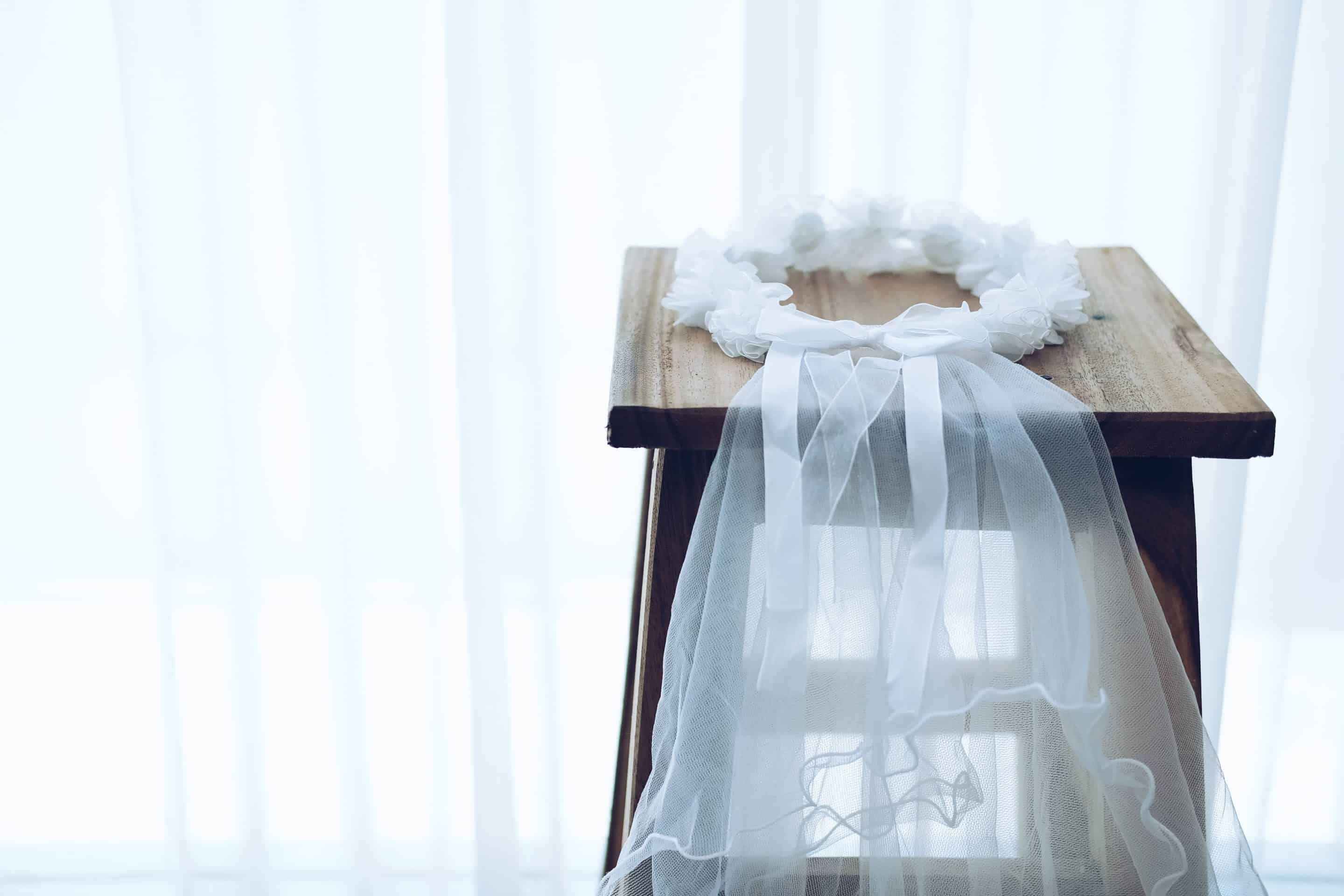
Veils are made from some of the most delicate fabrics in bridal fashion: tulle, silk, organza, and lace. These materials yellow, snag, and deteriorate far faster than the heavier fabrics used in gown construction.
Hairspray, makeup residue, perspiration, and even perfume — all invisible on the day — begin breaking down delicate fibers the moment the veil comes off. Understanding how to clean a wedding veil properly is the first step every bride should take within the first two weeks after the wedding.
What actually happens?
Leave a veil in a regular plastic bag or folded in a drawer for a year, and the damage becomes visible. Tulle yellows, especially along fold lines where fabric is under pressure. Lace edges fray.
Silk loses its sheen and becomes brittle. Invisible hairspray residue acts like a slow-working acid on delicate fibers, gradually weakening the weave from within.
Stains that look white or clear on the wedding day — champagne, white wine, floral water from a bouquet — oxidize over time and turn brown or yellow without any warning. By the time they become visible, they may already be permanent.
This is the same process that causes wedding gowns to yellow in storage, and what a wedding dress preservation kit contains addresses both the dress and the veil fabric using the same archival principles.
Types of veil damage after the wedding:
Yellowing along fold lines
Fabric held under pressure in a folded position yellows faster than material stored flat.
Hairspray and product residue
Hairspray is one of the most damaging substances for veil fabric. It bonds to tulle and lace fibers, attracting dust and creating a sticky film that oxidizes and weakens the material over time.
Snags and micro-tears
Veils pick up snags throughout the wedding day — from jewelry, chair backs, and bouquet wire. These tiny tears expand in storage if left unaddressed, turning small pulls into visible damage.
Makeup and perfume transfer
Foundation and lipstick transfer from face to veil throughout the day, especially during emotional moments.
Preserve with the dress or separately.
This is a question that Chicago brides often ask, and the answer depends on the veil’s construction and materials. In many cases, a professional cleaner will preserve both pieces together — it saves space, keeps the set complete, and makes symbolic sense.
For most brides, having the veil and dress preserved as a pair is the most practical and sentimental choice.
However, certain veils need to be preserved separately. A heavily beaded veil, for example, can press into and damage the gown fabric when stored in direct contact for years.
A veil with unique dye treatment carries a small risk of color transfer onto the gown. And a cathedral-length veil with significant three-dimensional lace detailing requires its own support structure to hold its shape correctly.
When to store the veil separately:
Heavy beading or embellishment
Dense beadwork can press into and mark the gown fabric when stored in close contact over long periods.
Color-treated or non-white veils
Blush, ivory, or subtly tinted veils carry a low risk of color transfer onto the dress fabric.
Cathedral or royal-length veils
Extra-long veils require their own support to maintain shape during storage.
Fragile vintage or heirloom veils
Older lace and silk need individual assessment and often require different handling techniques than modern tulle.
How to clean before storing it?
Professional cleaning is always the right starting point — but knowing what is and is not safe to attempt at home helps you protect the veil in the days immediately after the wedding, before a professional appointment.
Getting creases out of a wedding veil is one of the few things brides can manage carefully at home — hanging the veil in a steamy bathroom for several days allows gravity and humidity to release wrinkles naturally without any heat contact.
Never use an iron on a wedding veil. Tulle melts under high heat, and lace distorts permanently. Even pressing a cloth between the iron and fabric is risky on the finest bridal materials.
For spot treatment of small marks, dab gently with a soft white cloth and cold water — never rub, and never use tissue paper, which leaves fibers behind in delicate lace.
For everything else, spot-cleaning guidance for a wedding dress applies equally to veil fabric — both require the same gentle, dabbing technique with appropriate cleaning agents.
Storing the veil correctly after cleaning
Once your veil has been professionally cleaned, the storage method determines how well it holds up over the years. Acid-free tissue paper is essential — every fold in the veil should be cushioned to prevent crease lines forming in delicate material under pressure.
Never use regular tissue paper or newspaper, both of which contain acids that accelerate yellowing in stored fabric.
Avoid plastic bags and sealed plastic boxes entirely. Trapped moisture in plastic causes mildew and fabric breakdown over time, even when the veil looks perfectly dry when it goes in.
A breathable, acid-free storage environment — the same approach used for acid-free wedding dress storage — protects veil fabric by allowing gentle air circulation while keeping out dust and light.
Chicago’s humid summers make breathable storage even more important, as sealed containers trap moisture that accelerates deterioration in the city’s warmer months.
Passing the veil down as a family heirloom
A well-preserved wedding veil is one of the most practical bridal heirlooms a family can hold. Unlike a full gown, a veil is far easier to adapt across body types and styles — a daughter or niece can wear your veil with an entirely different dress and carry forward a genuine piece of family history.
Many Chicago brides who wear heirloom gowns pair them with a mother’s or grandmother’s veil, creating a layered connection across generations that no new accessory can replicate.
For the veil to remain wearable across decades, professional cleaning and proper storage are not optional — they are the only things standing between a beautiful heirloom and a yellowed, fragile remnant.
Chicago Wedding Dress Cleaners handles veil preservation alongside gown care, with free pickup and delivery across Chicagoland so brides never have to risk transporting delicate fabric themselves.
If you are unsure whether your veil needs professional attention, the answer is almost always yes — and acting within the first two weeks after the wedding gives you the best possible outcome.
Helpful Guidance
These articles will help you care for your veil and other delicate bridal pieces:
- How to store your wedding dress — the same principles that protect your gown apply directly to veil storage
- Best way to preserve your wedding dress — a full breakdown of professional preservation for the complete bridal look
- What is wedding dress preservation — understanding what professional preservation actually involves before you book
Expert advice worth reading:
For a complete look at everything involved in caring for your veil after the wedding — from fabric types to storage mistakes most brides make — this veil care guide from Brides covers every material and scenario with input from professional bridal specialists.
FAQs
Does a wedding veil really need professional cleaning after the wedding?
Yes — even if it looks clean. Hairspray, makeup, perfume, and body oils are invisible on the day but begin breaking down veil fibers almost immediately.
How soon after the wedding should I have my veil cleaned?
Within two weeks is the ideal window. The longer invisible stains sit untreated, the harder they are to remove.
Can I wash my wedding veil at home?
For minor surface dust, gentle handwashing in cold water with a very mild detergent is possible on some synthetic tulle veils.
What is the best way to remove creases from a wedding veil?
Hang the veil in a steamy bathroom for two to three days and allow gravity and humidity to release the wrinkles naturally.
Should my veil be stored in the same box as my wedding dress?
In most cases, yes. However, heavily beaded veils, color-treated veils, and very long cathedral-length veils are better preserved separately to prevent pressure damage and potential color transfer onto the gown fabric over time.
How do I store a wedding veil long-term?
Use an acid-free storage box with acid-free tissue paper cushioning every fold. Store in a cool, dry, dark space with consistent temperature — away from attics, basements, and direct sunlight. Never use sealed plastic bags or regular cardboard boxes.
Can a yellowed wedding veil be restored?
Often yes, depending on how long the yellowing has been present and the fabric type.
What fabrics are most common in wedding veils, and how do they differ in care?
Tulle is the most common and relatively durable, though it melts under heat. Silk is more delicate and prone to gravity distortion if hung for long periods.
Is it worth preserving a veil that cost very little or came from a chain store?
Preservation is about sentiment, not price. If you want to keep the veil as a memory or pass it on, professional cleaning and proper storage protect it regardless of its original cost.
Can I use a regular garment bag to store my veil?
Only if they are made from breathable fabric do plastic garment bags trap moisture, leading to mildew and yellowing over time.
What should I do if my veil has a small tear or snag?
Minor snags can sometimes be gently eased back into place with clean fingers.
How often should I check on a preserved veil in storage?
Check every one to two years. Look for any signs of yellowing, moisture, or pest damage.
Call (331) 267-5100 or visit chicagoweddingdresscleaners.com for a free consultation. Free pickup and delivery throughout Chicagoland, Northwest Indiana, and Southeast Wisconsin.