
Many Chicago residents wonder if hydrogen peroxide stains white clothes when used for cleaning or stain removal. No, hydrogen peroxide does not stain white garments – in fact, it’s one of the safest bleaching agents for white fabrics.
The 3% household solution brightens whites, removes stains, and sanitizes without causing yellow discoloration that chlorine bleach sometimes creates.
Understanding how hydrogen peroxide works on fabric helps you use it confidently for laundry needs. This mild oxidizing agent breaks down organic compounds in stains while gently whitening fabric fibers.
Chicago’s hard water actually enhances peroxide’s effectiveness, making it an excellent choice for local laundry challenges.
How Hydrogen Peroxide Works on Fabric?
Hydrogen peroxide releases oxygen when it comes into contact with organic materials, such as stains.
The oxygen bubbles lift and break down proteins, oils, and pigments embedded in the fibers of the fabrics. This chemical action removes discoloration without harsh chlorine damage.
The 3% concentration sold in drugstores is safe for most fabrics. This diluted solution provides effective cleaning without the risk of fiber damage. More substantial concentrations used in industrial settings require more caution.
Hydrogen Peroxide Properties
Peroxide offers these beneficial characteristics for laundry:
- Mild bleaching action whitening without harsh chemical damage
- Oxygen release lifts organic stains through the bubbling action
- Sanitizing properties killing bacteria and mold naturally
- Odor elimination breaks down smell-causing compounds
- Color-safe formulations available for non-white fabrics
Understanding proper spot removal techniques helps you use hydrogen peroxide effectively for various cleaning challenges.
Using Peroxide on White Clothing
Pour 3% hydrogen peroxide directly onto white fabric stains safely. The bubbling indicates active stain breakdown occurring immediately. Watch the foam effectively lift discoloration from fiber surfaces.
Apply peroxide to blood, wine, grass, and organic stains on whites. The oxidizing action works particularly well on protein-based discoloration. Let peroxide sit for 5-10 minutes before rinsing thoroughly.
Chicago residents can explore professional cleaning services for valuable white garments requiring expert stain removal and brightening.
Common White Fabric Stains Peroxide Removes
Blood stains respond well to hydrogen peroxide treatment on white surfaces. The enzyme’s action breaks down hemoglobin, releasing its red pigment. Apply immediately to fresh blood for best results.
Yellowing underarm stains disappear with peroxide and baking soda paste. The combination breaks down deodorant residue and oxidized sweat proteins. Scrub gently with an old toothbrush before washing.
Stains Responding to Peroxide
Hydrogen peroxide effectively removes these common white fabric stains:
- Blood stains are breaking down hemoglobin proteins completely
- Yellowed underarms from sweat and deodorant accumulation
- Red wine and juice removing anthocyanin pigmentation
- Grass stains oxidize chlorophyll from fabric fibers
- Mold and mildew killing spores and removing discoloration
Will Peroxide Damage White Fabrics?
Standard 3% hydrogen peroxide is safe for cotton white fabrics. The mild concentration brightens without weakening fibers when used appropriately. Cotton tolerates peroxide treatment exceptionally well.
Delicate white fabrics, including silk and wool, need caution with peroxide. These protein-based fibers may weaken from prolonged exposure. Test hidden areas first before treating visible portions.
White synthetics like polyester handle peroxide safely for stain removal. The stable synthetic fibers resist damage from mild oxidizing agents. However, avoid excessive soaking times, as this can cause weakening.
Hydrogen Peroxide vs. Chlorine Bleach
Hydrogen peroxide whitens without creating the yellow staining that chlorine causes. Chlorine bleach reacts with minerals in Chicago’s hard water, creating yellowing. Peroxide avoids this problematic chemical reaction completely.
Peroxide is gentler on fabric fibers than harsh chlorine bleach. Oxygen-based whitening preserves fabric integrity better in the long term. Garments last longer with regular peroxide use instead.
Peroxide Advantages Over Bleach
Hydrogen peroxide offers these benefits compared to chlorine:
- No yellowing from mineral reactions in hard water
- Gentler on fibers, preserving fabric strength over time
- No harmful fumes, safer for household use
- Environmentally friendly, breaking down into water and oxygen
- Color-safe options available for non-white fabrics
Proper Peroxide Application Methods
Test peroxide on hidden fabric areas before treating visible stains. Check for colorfastness and adverse reactions in inconspicuous spots. Inside hems or seams provide safe testing locations.
Pour peroxide directly onto stains rather than diluting initially for whites. Full-strength 3% solution provides maximum stain-fighting effectiveness. The direct application concentrates cleaning power on problem areas.
Allow peroxide to sit on the stains for 5-15 minutes, depending on the severity. Extended contact time improves the breakdown of stubborn organic compounds. Monitor closely to prevent excessive exposure to delicate materials.
Combining Peroxide with Other Cleaners
Mix hydrogen peroxide with baking soda to create a powerful stain-fighting paste. The combination tackles both oxidation and abrasion, removing stubborn marks. Apply to yellowed areas or set-in stains for effective results.
Add dish soap to peroxide for oil-based stain removal on whites. The surfactants in soap break down oils while peroxide oxidizes pigments. This dual-action approach handles complex combination stains.
Safe Peroxide Combinations
Use these effective peroxide mixture combinations safely:
- Peroxide plus baking soda creates a paste for scrubbing action
- Peroxide plus dish soap tackling oil and protein stains
- Peroxide plus water for soaking entire garments
- Never mix with vinegar or ammonia, creating reactions

Storing and Handling Peroxide
Store hydrogen peroxide in the original brown bottle, protecting it from light. Light exposure causes premature decomposition, reducing cleaning effectiveness. Dark storage locations preserve peroxide strength longer.
Keep peroxide bottles tightly capped to prevent oxygen from escaping and contamination. Loose caps allow the active ingredient to degrade, reducing effectiveness over time. Proper sealing maintains product quality for months.
Check expiration dates using peroxide before effectiveness declines significantly. Expired peroxide loses strength, resulting in inadequate stain removal. Replace bottles annually for optimal cleaning performance.
When Professional Help Is Needed?
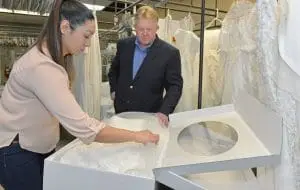
Expensive white designer clothing justifies professional cleaning and brightening. Dry cleaners have industrial-strength peroxide formulations unavailable to consumers. Expert treatment protects valuable fashion investments adequately.
Set-in yellowing on valuable white garments needs professional assessment first. Home treatments can sometimes irreversibly damage fragile, aged fabrics.
Conservation experts determine appropriate safe treatment approaches.
Chicago residents can explore expert preservation tips for valuable white garments requiring professional whitening and stain removal.
More Information:
Comprehensive white clothing maintenance extends beyond hydrogen peroxide use. Here are helpful guides for Chicago residents:
- Wedding dress restoration services
- Clean wedding dress with Oxiclean
- What does a white dress symbolize?
Expert Fabric Care Guidance:
For comprehensive information on hydrogen peroxide use and white fabric maintenance, the American Cleaning Institute provides research-based recommendations for household laundry care.
FAQs
Does hydrogen peroxide bleach white clothes?
Yes, hydrogen peroxide gently bleaches white clothes, safely brightening them.
Can hydrogen peroxide damage white fabric?
No, 3% hydrogen peroxide is safe for white cotton and synthetic fabrics.
How long should you leave peroxide on white clothes?
Leave peroxide on white fabric stains for 5-15 minutes, depending on severity.
Is peroxide or bleach better for white clothes?
Hydrogen peroxide is better for white clothes than chlorine bleach.
Will peroxide remove yellow stains from white shirts?
Yes, peroxide effectively removes yellow underarm and collar stains from white shirts.
Can you soak white clothes in hydrogen peroxide?
Yes, soak white clothes in peroxide solution (1 cup per gallon of water) for 30-60 minutes.
Does peroxide work on old stains?
Hydrogen peroxide works on old stains but requires longer contact time or multiple applications.
Can you mix peroxide and laundry detergent?
Yes, you can add hydrogen peroxide to laundry loads with regular detergent.
Will peroxide turn white clothes yellow?
No, hydrogen peroxide does not turn white clothes yellow. Unlike chlorine bleach, peroxide brightens whites without creating yellowing from mineral reactions.
How much peroxide do you add to laundry?
Add 1 cup of 3% hydrogen peroxide to the washing machine for brightening white loads.
Does peroxide kill bacteria in laundry?
Yes, hydrogen peroxide naturally kills bacteria, mold, and viruses in laundry.
Can you use expired hydrogen peroxide on clothes?
Expired hydrogen peroxide loses strength, providing inadequate stain removal.