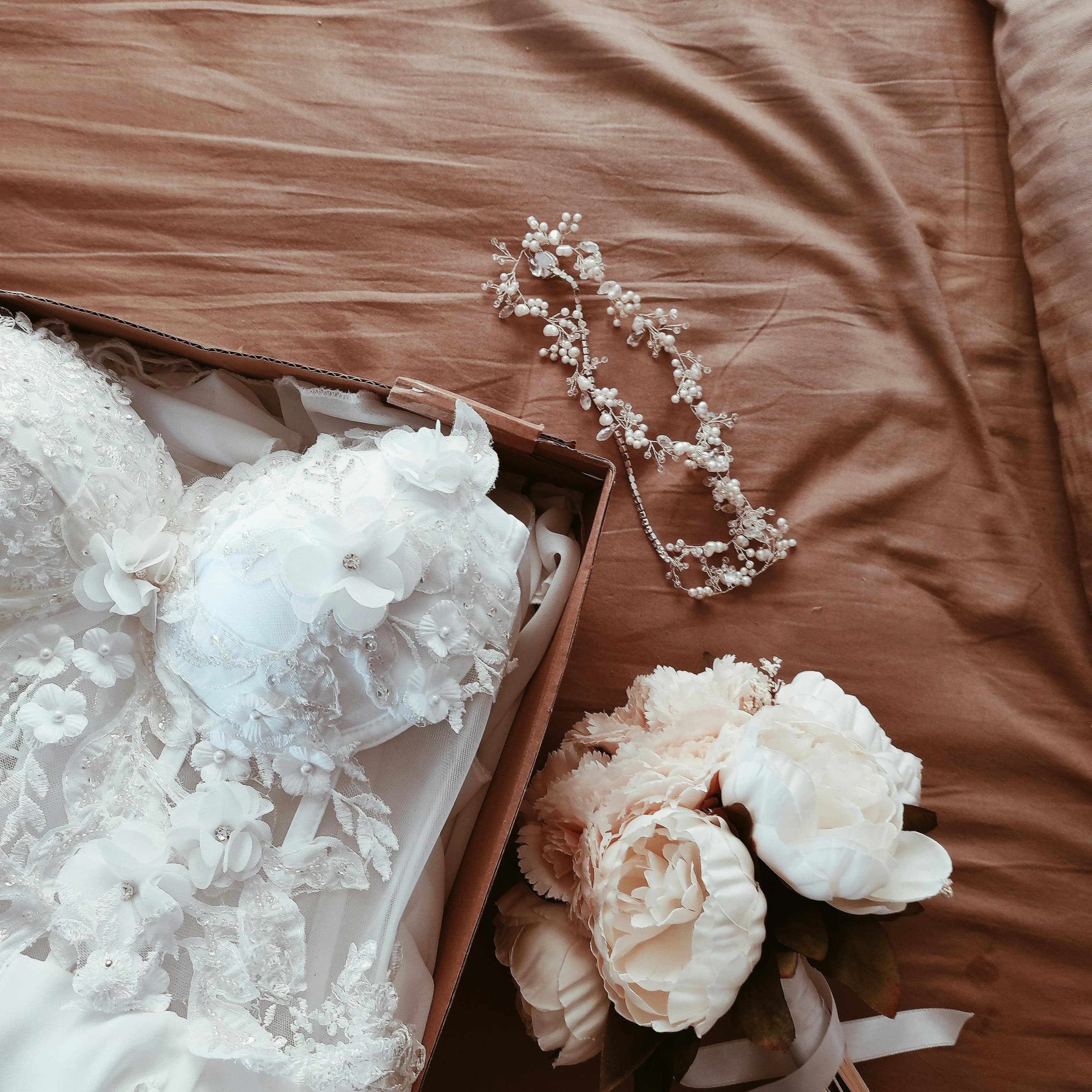
No bride wants to think about things going wrong on her wedding day — but the ones who pack a proper dress kit in advance are the ones who handle small disasters calmly while everyone else panics.
A well-stocked emergency kit does not mean expecting the worst. It means giving yourself the freedom to enjoy every moment without a single wardrobe problem derailing the day.
Here is exactly what to pack and why each item earns its place.
Every bride needs a dedicated dress kit
Wedding days are long. Between getting ready, the ceremony, portraits, and a full reception, the gown is worn for eight to twelve hours across multiple environments — hotel rooms, outdoor venues, dance floors, and everything in between.
Zippers slip. Hems catch on heels. Champagne gets spilled. A stitch comes loose during the first dance. None of these moments needs to become a crisis if you have the right items within reach.
The kit should be compact enough to hand to your maid of honor and forget about, yet comprehensive enough to handle anything the dress might encounter throughout the day. Assign one person to manage it throughout the wedding.
As the bride, the last thing you need on the morning of the wedding is searching for safety pins while your hair and makeup are being done.
Fashion tape for a strapless dress is one of the most-used items in any bridal kit — worth buying specifically for the style of the gown you are wearing rather than relying on a generic version from a general kit.
The dress care essentials
These are the items that most often come out of the kit at real weddings. Every single one earns its place.
Handheld steamer and distilled water
A compact handheld steamer is the single most valuable item in any dress kit. Transport wrinkles, compression marks from sitting in the car, and minor creases from the garment bag all respond to a quick steam in the getting-ready room.
Always pack distilled water alongside it — tap water contains minerals that leave white spots on white and ivory fabric, which is the last thing you want an hour before the ceremony.
Why you should never steam your wedding dress yourself without knowing your fabric is worth reading before the wedding day — certain fabrics, including silk and taffeta, need a different approach entirely.
Fashion tape
Fashion tape is the emergency fix for almost every bodice and strap problem.
A strapless gown that starts to slip during the reception, a neckline that gaps at the wrong moment, a strap that refuses to stay in place — fashion tape addresses all of these in under thirty seconds without anyone noticing.
Pack at least two rolls in the kit. It is also useful for securing the bustle if the original fastening fails during the reception.
Safety pins in assorted sizes
Safety pins are the backup when fashion tape is not enough. Broken bustles, split seams, a bridesmaid’s zipper that will not close, a loose hem that a heel has caught — safety pins in a range of sizes handle all of these.
Pack at least a dozen in small, medium, and large. Thread them through the inside of the gown so the fix is invisible from the outside.
Mini sewing kit with matching thread
A small sewing kit with a needle, scissors, and thread matched to your gown color handles anything that needs a more permanent fix than safety pins. A bead that comes loose from the bodice.
A small tear in a seam from bending or dancing. A button on the back of the gown comes loose during the ceremony.
Stain management
White and ivory fabric show everything. Chicago wedding receptions involve champagne, red wine, cake, and food — across a gown that costs thousands of dollars. Stain management items are not optional.
Stain remover pen
A stain remover pen — Tide To Go is the most widely recommended — handles fresh liquid stains on most synthetic bridal fabrics within seconds of application. The technique matters: blot, never rub. Rubbing spreads the stain and pushes it deeper into the fabric fibers.
Dab gently from the outside of the stain toward the center, then press a clean white cloth against the area to absorb the lifted liquid.
How to get wine out of clothes follows the same blotting principle — the method that works on everyday fabric works on bridal fabric too, provided you act immediately and use no heat.
White chalk or baby powder
For stains that have already dried or that the stain pen cannot fully address, white chalk rubbed gently over the mark camouflages discoloration on white and ivory fabric well enough to get through photographs and the ceremony.
Clean white cloths
Pack three or four small clean white cloths — not tissues, which leave fibers on delicate fabric.
Use these for blotting stains, protecting fabric sections when using the steamer, and general handling of the gown throughout the day without transferring skin oils directly onto the fabric.
Dress structure and fit
Lint roller
A compact lint roller removes pet hair, dust, loose threads, and any debris that settles on the skirt throughout the day.
In Chicago’s spring and fall wedding seasons, outdoor ceremony venues mean pollen and airborne particles constantly land on white fabric.
A quick pass with a lint roller before portraits and before the ceremony entrance keeps the gown camera-ready without any fuss.
Dress weights
Dress weights are small sticky tabs that attach to the interior hem of the skirt and prevent lightweight fabrics — chiffon, tulle, organza — from floating up on windy days.
Chicago lakefront venues and rooftop reception spaces are notoriously breezy, and a gown that catches the wind creates both a wardrobe and a photography problem.
Static guard spray
Static electricity in synthetic fabrics causes the skirt to cling to legs and hosiery throughout the day, particularly in climate-controlled indoor venues.
A small travel bottle of static guard, sprayed lightly inside the skirt, eliminates this immediately.
Post-wedding dress care
The kit should also contain one item that looks forward rather than backward — a clean, breathable garment bag for transporting the dress after the reception.
The gown that arrives pressed and perfect in the morning leaves the reception carrying food, drink, and soil from the entire day. How it is handled in the hours after the wedding directly affects its condition when it reaches a professional cleaner.
Fold a lightweight, breathable garment bag into the kit before the wedding. After the reception, the gown goes straight into that bag — not crammed into a suitcase, not left crumpled on a hotel room chair.
Clean your dress within the first two weeks after the wedding and reception. Invisible stains from champagne, floral dye, and body oils begin oxidizing immediately and become dramatically harder to remove the longer they sit untreated in the fabric.
Quick tip: Pack the kit at least two weeks before the wedding — not the night before. The week before a wedding is a whirlwind, and last-minute packing means items get forgotten. A kit packed early is also ready to use at the rehearsal dinner and any other pre-wedding events.
Helpful guidance:
These articles support dress care before, during, and after the wedding day:
- Should you clean your dress after the wedding
- Professional wedding dress cleaner
- Wedding dress preservation cost
Expert advice worth reading:
For a complete and detailed emergency kit checklist built specifically for brides — including every item category from dress care to personal wellbeing across the full wedding day — this ultimate bridal emergency kit guide from The Knot covers every scenario with input from wedding planners and bridal stylists.
Frequently Asked Questions
Who should be in charge of the emergency kit on the wedding day?
The maid of honor is the traditional choice — she stays close to the bride throughout the day and can access the kit immediately when needed. Brief her on every item in the kit and where it is before the wedding morning, so she does not have to ask when something comes up.
When should I pack the emergency kit?
At least two weeks before the wedding. The week leading up to the day is too hectic for careful packing. An early-packed kit is also available for the rehearsal dinner and any other pre-wedding events where dress mishaps can happen.
Is a handheld steamer worth including if I have already had the dress professionally pressed?
Yes. Professional pressing two to five days before the wedding is essential — but transport wrinkles from the car journey to the venue, compression marks from sitting during the ceremony, and minor creases from the getting-ready room can all appear after pressing. A handheld steamer handles these minor touch-ups in minutes.
What is the best stain remover for a white wedding dress?
A Tide To Go pen is the most widely recommended option for fresh liquid stains on synthetic bridal fabrics. For oily stains, baby powder applied immediately is more effective. White chalk camouflages dried marks well enough to get through photographs until professional cleaning after the wedding.
How do I use fashion tape on a wedding dress?
Clean and dry the skin surface first — fashion tape does not adhere to damp or oily skin. Press the tape firmly against the skin, then press the fabric onto the tape and hold for ten seconds. For a strapless bodice, apply a strip every four to six inches around the interior neckline. Replace throughout the day as needed — each strip lasts several hours of active wear.
Should the emergency kit include anything for after the wedding?
Yes — a clean breathable garment bag for transporting the dress from the reception venue is worth including. The gown needs to go directly into a proper bag after the reception rather than being left crumpled or packed into a suitcase, which can cause compression damage and make post-wedding cleaning more difficult.
Does the kit need to include anything for the veil?
Yes — fashion tape for securing the veil comb, a lint roller pass before the ceremony, and a steamer for any transport creases in the veil fabric.