A wedding dress sitting in storage years after the wedding is either being protected or slowly deteriorating — there is no neutral ground.
Preservation is not a one-time event that locks the gown in perfect condition indefinitely. It is an ongoing commitment that requires the right materials, the right environment, and periodic attention.
Here are six tips every bride needs to know for keeping a gown in excellent condition long after the wedding day.
Tip 1
Every other preservation decision rests on this one.
A gown that goes into storage without professional cleaning is carrying invisible stains from the wedding day — perspiration, champagne, floral dye, body oils, and food contact — that begin oxidizing in the fabric immediately.
These compounds do not stay invisible. Within six months to a year, they surface as yellow or brown patches that become progressively harder to remove the longer they sit untreated.
This applies even to gowns that look clean. White and ivory fabric shows nothing immediately after a reception, but conceals significant organic residue that the eye simply cannot detect.
Should you clean your dress after the wedding? There’s a single clear answer — yes, within the first two weeks, always.
Tip 2
Many brides who had their dress preserved in the years immediately after the wedding used materials that seemed adequate at the time, but are not holding up over a decade or more.
Regular cardboard boxes, plastic garment bags, and standard tissue paper all introduce acidic compounds that migrate into fabric over time — causing the very yellowing they appeared to prevent.
If the gown has been in storage for several years and the original preservation materials were not of archival quality, re-preservation is worth arranging.
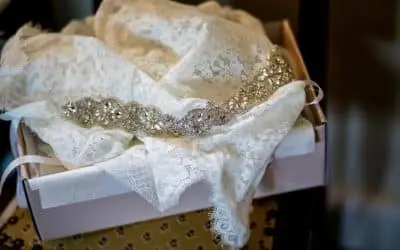
This involves having the gown professionally assessed and cleaned, then reboxed in genuinely acid-free, lignin-free archival materials.
Acid-free wedding dress storage using museum-grade materials is the standard that makes a difference over ten, twenty, and thirty-year storage periods — not just in the first few months after the wedding.
Signs that your current storage materials may need upgrading:
- The box has brown internal fluting visible at the edges — indicating it is not fully acid-free throughout
- The tissue paper inside has yellowed or compressed into the fabric surface
- The box has been stored in an attic, basement, or garage where temperature and humidity fluctuate significantly
- A faint chemical or musty smell when the box is opened
Tip 3
An archival-quality box does important protective work — but it cannot compensate for a storage environment that actively damages fabric.
Chicago’s seasonal extremes make this especially important. Attic temperatures in summer routinely exceed 100°F in Chicagoland, which accelerates every chemical reaction, degrading fabric fibers.
The right storage environment for a Chicago gown
- Temperature — stable between 65 and 75°F year-round; interior bedroom closets away from exterior walls are the most reliable option in most Chicago homes
- Humidity — below 55%; avoid any space that feels damp or smells musty during the summer months
- Light — complete darkness; even indirect light through a nearby window accelerates fabric yellowing over the years
- Pest risk — away from any area where moths, silverfish, or mice have been observed; these are the most common causes of catastrophic gown damage in long-term storage
Storing a wedding dress for two or more years correctly means reassessing the storage environment every time living conditions change — a home renovation, a new storage arrangement, or a move all create reasons to check that the gown’s location still meets these conditions.
Tip 4
A preservation box is not a set-and-forget solution.
Periodic inspection is the only way to catch developing problems — new yellowing, moisture intrusion, pest activity, or seam deterioration — before they become irreversible.
The Association of Wedding Gown Specialists recommends checking stored gowns at least once every 1 to 2 years, and more frequently if storage conditions are not perfectly stable.
The inspection process matters as much as the frequency. Always wear clean white cotton gloves when handling the fabric — bare skin transfers oils that attract dust and cause long-term discoloration.
Work through the gown methodically under good lighting, checking fold lines, underarm areas, the hem, and any embellished sections for signs of change.
Check your dress without damaging it. Covers the full inspection process in detail — the technique used during each check is as important as the check itself.
Tip 5
When an inspection reveals a problem — new yellowing, a musty smell, visible moisture marks, or any sign of pest activity — the right response is immediate professional assessment, not continued monitoring.
Problems in stored fabric do not stabilize on their own. Yellowing deepens. Mildew spreads.
Oxidized stains become more resistant to treatment with every additional month they sit in the fabric.
Restoring a yellowed wedding dress detected at the one-year inspection is a significantly more manageable project than the same yellowing discovered at the five-year mark.
The same principle applies to every other type of developing damage — the sooner a specialist sees it, the more options are available for addressing it.
Here is what warrants immediate professional contact rather than a wait-and-see approach:
- Any musty or sour smell when the box is opened indicates moisture and potential mildew
- Brown or yellow patches that were not present at the last inspection
- Fabric that feels stiffer or more brittle than during the previous check
- Any sign of pest activity — holes, fine powder, webbing, or shed insect casings near the gown
Tip 6
Many brides wear their preserved gown again — for vow renewals, anniversary photoshoots, or passing it to a daughter or niece for her own wedding. Each time the gown is worn, it accumulates the same invisible staining from the original wedding day all over again.
Body oils, perspiration, and any food or drink contact from the event begin oxidizing in the fabric the moment the dress comes off.
Re-preservation after each wear is not optional — it is what keeps the gown usable across multiple occasions rather than causing it to deteriorate after the second or third wear.
Clean your dress after the wedding applies equally to every subsequent occasion the gown is worn — the two-week window for professional cleaning is the same whether it is the original wedding or a vow renewal twenty years later.
Wedding dress preservation cost for re-preservation after a subsequent wearing is typically less involved than the original cleaning and boxing, but it is just as important for protecting the gown’s long-term condition and keeping future options open.
Quick tip: Set a calendar reminder right now for your next gown inspection — twelve months from today. Treat it the same way you would a smoke alarm check. Catching a developing problem at the one-year mark is almost always fixable. Finding it at the five-year mark often is not.
Helpful Guidance:
These articles support every stage of long-term wedding dress preservation:
- Best way to preserve your wedding dress
- Wedding dress preservation worth it
- Honor your wedding dress after the big day
Expert advice worth reading:
For a complete guide to long-term wedding dress preservation — including what museum-conservation standards look like applied to bridal fabric and how to evaluate whether a gown’s current storage is meeting archival requirements — this complete preservation guide from The Knot covers every scenario with honest expert input.
FAQs
Is it too late to preserve a wedding dress that has been sitting in storage for years?
In most cases, no. Even gowns stored for ten or more years in less-than-ideal conditions can be professionally assessed, cleaned, and re-preserved.
How often should a long-stored wedding dress be re-preserved?
Every ten to fifteen years is a reasonable cycle for re-preservation if the gown has not been worn again.
Can I add silica gel packets to the preservation box to control moisture?
Yes — silica gel packets help absorb excess humidity inside the storage box.
What is the best climate-controlled storage option for a Chicago bride who doesn’t have ideal home conditions?
A climate-controlled storage unit that maintains stable temperature and humidity year-round is a genuine alternative for brides without a suitable interior room at home.
Does the gown need re-preservation if it was never worn after the original wedding?
If the gown has been in genuinely archival-quality storage with no signs of developing issues at annual inspections, it may not need full re-preservation on a fixed schedule.
Can accessories like veils and gloves be preserved alongside the gown for years?
Yes — veils, gloves, and fabric-based accessories can be preserved alongside the gown using the same archival materials and storage principles.
What should I do if I find a stain I missed during the original cleaning?
Contact a professional immediately rather than attempting home treatment on a fabric that may be years old and potentially fragile.
Call (331) 267-5100 or visit chicagoweddingdresscleaners.com for a free consultation. Free pickup and delivery throughout Chicagoland, Northwest Indiana, and Southeast Wisconsin.