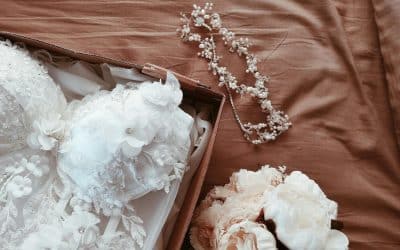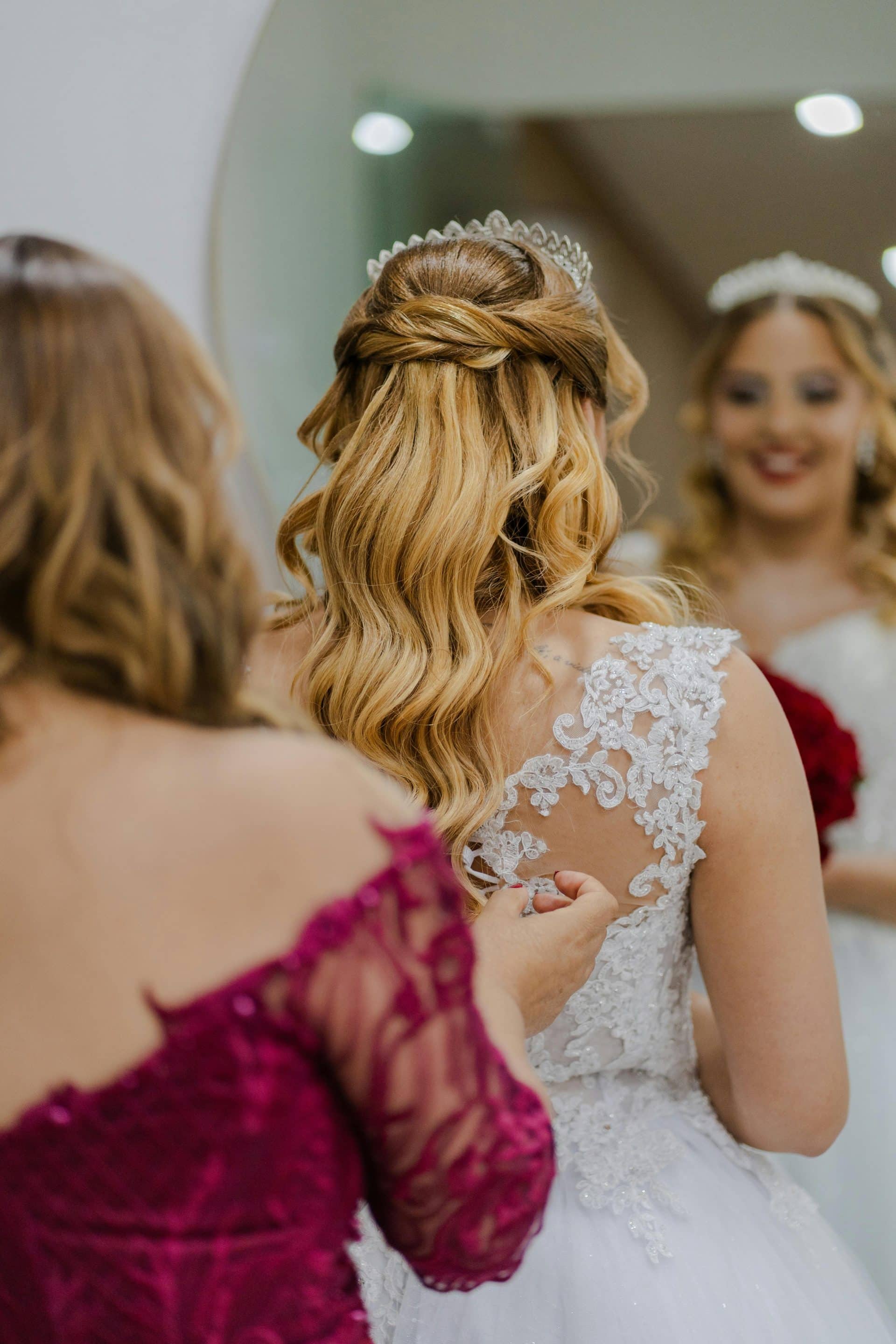
A vintage gown carries something no new dress ever will — history, character, and the weight of another woman’s most important day.
But restoring one is not a simple process, and walking into it without realistic expectations leads to disappointment.
Here is an honest guide to what the restoration journey actually looks like, from the moment you open that box to the day the gown comes back ready to wear.
First, understand what restoration actually covers
Restoration is not the same as a standard clean. It addresses age — the yellowing, the oxidized stains, the weakened seams, the missing beads, the fragile lace that has been folded in the same position for thirty years.
A restored gown comes back structurally sound, significantly brightened, and ready for either wearing or long-term preservation.
What restoration does not do is perform miracles on fabric that has genuinely deteriorated beyond repair.
If fibers have rotted, if silk has become so brittle that it crumbles at the fold lines, or if the structure has collapsed entirely, a specialist will tell you up front what is salvageable and what is not.
That honesty is part of the service, and it matters. Understanding what wedding dress preservation means as a broader process helps you frame what restoration can achieve within it.
The assessment
The first thing any experienced restorer does is spend real time with the gown before touching it.
They are looking for fabric composition, structural integrity, stain location and type, embellishment condition, and the history written into every fold and worn edge.
Here is what a thorough assessment covers:
- Fabric identification — silk, satin, organza, tulle, lace, and synthetic blends each require completely different cleaning approaches
- Stain mapping — visible stains are noted, but invisible ones from champagne, perspiration, and body oils are often more significant
- Seam and lining condition — older gowns frequently have deteriorated internal linings, even when the exterior looks intact
- Yellowing severity — light surface yellowing responds very differently to treatment than deep oxidation that has set for over fifty years
Getting underarm stains out of silk alone requires a different approach than treating a sugar stain on polyester, and a gown from the 1960s often has both sitting side by side.
The yellowing question — honest answers
Most people want to know one thing: will my yellowed gown come back white?
The answer is usually yes, to a significant degree — but the result depends heavily on fabric type and how long the discoloration has been developing.
Cotton and polyester respond best to color restoration. Silk is the most difficult — it has a natural protein structure that reacts to oxidation in ways other fabrics do not, and gowns that are heavily yellowed silk may return brighter but not pure white.
What causes yellowing in the first place is worth understanding. Invisible stains from the original wedding day — sugar compounds in champagne, perspiration, perfume, and floral contact — oxidize slowly inside the fabric fibers over the years.
Plastic storage bags accelerate this dramatically, releasing fumes that react with the fabric itself. A gown stored for forty years in a sealed plastic bag will have more challenging yellowing than one kept in breathable materials in a climate-stable room.
Knowing how long a wedding dress stays white under different conditions gives you a realistic frame for what your specific gown might need.
Repairs — the work nobody talks about enough
Color restoration gets all the attention, but repair work is often where the most skilled hands are needed. Sourcing period-appropriate lace to replace a damaged section.
Reattaching beading using techniques that match the original construction. Reinforcing a lining that has deteriorated faster than the exterior. Replacing metal-backed or wood-core buttons that cannot survive the cleaning process with period-matched alternatives.
None of this is fast, and none of it should be. A seamstress working on a 1950s gown is dealing with construction methods and materials that are no longer used in standard bridal production.
Restoring a yellowed wedding dress is one part of the project — getting the repairs right so the gown holds up through a full wedding day is the other. Both matter equally.
After restoration
A restored gown that goes back into a plastic bag or a regular cardboard box begins deteriorating again almost immediately.
Acid-free wedding dress storage — archival boxes, lignin-free tissue paper at every fold, breathable materials throughout — is what protects the restoration work over the years ahead.
Chicago’s seasonal extremes matter here. Attics reach summer temperatures that actively damage restored fabric.
Basements introduce moisture. Any space with exterior walls experiences temperature cycling that weakens fibers over time.
A climate-stable interior room with consistent conditions is the only appropriate long-term storage environment for a gown that has already been through one restoration.
If you plan to wear the gown and then pass it forward to a daughter or niece, have it professionally cleaned again after your wedding, before it goes back into storage.
Storing a wedding dress correctly for long-term preservation after your own wedding is the final commitment to keeping the gown’s story going — and it is every bit as important as the restoration that made wearing it possible in the first place.
Helpful Guidance:
These articles will help you care for your restored gown through every stage:
- Heirloom gown preservation in Chicago
- Best way to preserve your wedding dress
- Wedding dress preservation worth it
Expert advice worth reading:
For a detailed look at what professional vintage gown restoration involves — including real examples of gowns brought back from significant damage — this complete wedding dress restoration guide from The Knot covers the full process with input from experienced bridal care specialists.
FAQs
What qualifies as a vintage wedding dress?
Any gown worn at a wedding twenty or more years ago is generally considered vintage. Gowns from fifty or more years ago are sometimes classified as antiques. The older the gown, the more specialist knowledge and care the restoration process requires.
Can a gown that has turned completely yellow be restored?
In most cases, yes — to a significant degree. Cotton and polyester whiten most fully. Silk is harder to restore to pure white, but it can be substantially brightened. The severity of yellowing and how long it has been developing both affect the final result.
How long does the full restoration process take?
Allow at least six months for a straightforward project. More complex restorations involving significant damage, color treatment, and a full refit realistically take nine to twelve months. Starting early is the single most important planning decision you can make.
Does the gown need cleaning before repairs and alterations begin?
Always. Cutting into an uncleaned vintage gown permanently locks existing stains into the fabric along the new seam lines. Cleaning comes first — without exception — before any repair or fitting work begins.
What happens to metal buttons and fastenings during the restoration process?
Metal-backed and wood-core buttons are often removed before cleaning because they rust or react badly to water-based treatments. A specialist will discuss this with you before proceeding and either restore the original buttons separately or source period-appropriate replacements.
Can the gown be made significantly larger to fit a modern bride?
Often yes. Skilled seamstresses experienced in vintage construction can accommodate up to ten size differences, depending on the seam allowance built into the original gown. This must be assessed in person — it cannot be determined from a photo or description alone.
Is restoration more expensive than buying a new dress?
It can be, for complex projects. But cost is rarely the deciding factor when the gown has deep personal meaning. A new dress cannot replicate what a family gown carries — and for many brides, that is the entire point.
What if the gown is too fragile to wear for the full wedding day?
Wearing it for the ceremony only and changing for the reception is a sensible approach many brides choose. It honors the gown without subjecting fragile, restored fabric to hours of dancing and celebration. Plan the change in advance and assign someone to care for the gown during the reception.
Should the veil be restored alongside the gown?
Yes — if the original veil still exists and you want to wear it, have it assessed and restored at the same time as the gown. Vintage veils face the same yellowing and fabric deterioration challenges, and a matching restored set from the same era creates a genuinely beautiful bridal look.
What is the difference between restoration and preservation?
Restoration addresses existing damage — yellowing, stains, broken seams, and missing embellishments. Preservation protects the gown going forward — acid-free storage, archival boxing, and proper environmental conditions. A complete project involves both in sequence.
How do I store the gown correctly after restoration?
Use acid-free archival boxes with lignin-free tissue paper cushioning every fold. Store in a cool, dark, climate-stable interior space — away from attics, basements, and exterior walls. Never use plastic bags or standard cardboard boxes.
Can Chicago Wedding Dress Cleaners handle vintage gowns from the mid-twentieth century?
Yes. Chicago Wedding Dress Cleaners has extensive experience cleaning heirloom and vintage gowns throughout Chicagoland, including those from the 1940s through the 1980s.
Free pickup and delivery means your fragile vintage fabric never has to be transported by car — the team comes to you directly.
Call (331) 267-5100 or visit chicagoweddingdresscleaners.com for a free consultation. Free pickup and delivery throughout Chicagoland, Northwest Indiana, and Southeast Wisconsin.