
You open a box in the attic, and there it is: your mother’s wedding dress, yellowed, folded tight, carrying forty years of silence.
Maybe it smells faintly of the past. Maybe a bead has come loose, or the lace along the hem has frayed. But underneath all of that, the gown is still there. And with the right care, it can come back.
Restoring a family wedding gown is one of the most personal things a bride can do. It is also one of the most misunderstood.
Many people assume the yellowing is permanent, the stains are locked in, or the fabric is too old to save. In most cases, none of that is true — but the outcome depends entirely on what happens next.
Important thing to know before you do anything
Do not touch it with your bare hands. Do not shake it out. Do not hold it up to the light by its most fragile sections and tug at it.
Vintage fabric becomes brittle over the decades. Silk fibers weaken. Lace grows fragile along its edges. What feels intact can split under minimal stress if the weave has deteriorated. Lay the gown flat on a clean white surface and look before you touch.
Note every problem area — the yellowing along fold lines, the brown oxidation patches near the underarms, any sections where the fabric looks thin, or the lace has separated from its backing.
Why does yellowing happen?
That yellow color is not dirt. It is chemistry. Sugar compounds from champagne and cake, perspiration, perfume, and body oils left in the fabric after the original wedding slowly oxidize over years and decades — turning invisible stains into visible discoloration.
The plastic garment bags many brides used for storage significantly accelerated this process, releasing fumes that reacted with the fabric itself.
Here is what affects how much of that yellowing can be reversed:
- Fabric type matters most — cotton and polyester respond better to restoration treatments than silk, which is the most resistant to full whitening
- Storage conditions — a gown stored in acid-free materials in a stable environment restores more fully than one that spent decades in a plastic bag in an attic
- How long the stains have been setting — the longer organic compounds have been oxidizing in the fabric, the deeper they sit.
- Whether it was cleaned before original storage, untreated stains from the original wedding day compound every year they sit.
Cleaning comes before everything else.
Before a sewist cuts a single seam, before a repair begins, before any alteration is considered, the gown gets cleaned. This is non-negotiable.
Cutting into an uncleaned vintage gown permanently locks existing stains into the fabric along the new seam lines. Once those cuts are made, what was treatable becomes permanent.
A professional cleaning for a vintage gown is not a standard wash. Each stain area is assessed individually and pre-treated based on the fabric type in that section.
Getting underarm stains out of silk requires different chemistry and technique than treating a champagne stain on a polyester panel or a grass mark along a cotton hem. The cleaning process on a truly vintage gown can take weeks — and that is appropriate. Rushing it causes damage.
The decisions a sewist cannot make for you
Once the gown is clean, a skilled sewist assesses what structural work is needed. Seams that have split. Lace that has detached from the bodice. Beading that has fallen away.
Fastenings that have corroded or broken. A lining that has deteriorated faster than the outer fabric and needs full replacement.
Sourcing replacement materials for a vintage gown takes knowledge and patience. Period-appropriate lace, buttons, and beading are not available off any standard shelf.
A seamstress experienced in vintage bridal fabric knows where to source materials that match the original as closely as possible — and when a close match is not achievable, how to redistribute existing elements so the repair is invisible rather than obvious.
The only decision you can make is how much of the original design to keep. Some sections of a gown may be too damaged to wear as a full garment, but carry details worth preserving in other forms.
Turning elements of a wedding dress into a keepsake — a panel of original lace framed in a shadow box, original buttons sewn into a new gown’s lining, a section of silk made into a small pouch — are all ways to honor the original without forcing a damaged gown to do something it physically cannot.
Fitting a gown built for someone else
This is where most people underestimate the challenge. Your mother and grandmother were almost certainly of different sizes, heights, and shapes.
Most brides today are both taller and larger than women who wore these gowns in the 1950s, 1960s, or 1970s.
Taking a gown in is relatively straightforward — taking it out depends entirely on how much seam allowance was built into the original construction.
A good sewist will assess this honestly during the first consultation. Do not commit to wearing the gown as a full garment until you know what fit adjustments are actually possible.
The part most people forget
The gown has been cleaned, repaired, and fitted. It looks extraordinary. And then it goes back into storage — often without any more thought than the original bride gave it fifty years ago.
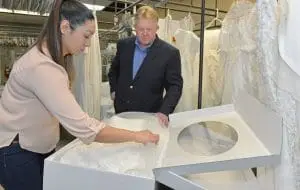
That is a mistake. Acid-free wedding dress storage is what protects a restored gown from deteriorating again. Every fold needs acid-free tissue cushioning. The box needs to be of archival quality.
The storage location needs to be climate-stable — away from Chicago’s attic heat in summer, away from the basement’s cold and damp in winter, and away from any exterior wall where temperatures fluctuate with the seasons.
If you wear the gown at your own wedding and hope to pass it to a daughter or niece, have it professionally cleaned again before it goes back into storage. The history of how these gowns age makes it clear that each generation’s care — or neglect — directly determines the options available to the next.
A gown that has already been restored once deserves more care in its second storage period, not less. Storing it correctly for the long term after your own wedding is the final act of respect for everything the restoration process achieved.
Helpful Information:
If you are working with a family heirloom gown, these articles will help at every stage:
Further Details:
For real bride stories and professional insight on wearing a restored family gown — including what the experience actually feels like and what to expect from the process — Brides’ Guide to Repurposing Wedding Dresses is one of the most honest and practical resources available.
FAQs
Is it actually possible to restore a gown?
Yes, in most cases. Even deeply yellowed gowns respond well to professional restoration treatment. Cotton and synthetic fabrics whiten most fully.
How do I know whether the gown is too far gone to restore?
If the fabric disintegrates when touched or if fibers are rotting and fraying apart without any pressure, the gown may be beyond full restoration.
Should I attempt any home cleaning?
No. Home cleaning attempts on vintage bridal fabric — even gentle hand washing — risk irreversible damage. Silk shrinks. Lace distorts.
What causes those irregular brown patches on old gowns?
Brown patches are almost always oxidized stains from the original wedding day — perspiration, champagne, sugary drinks, or food spills that were invisible when the gown went into storage.
Can the gown be altered to fit me?
Often yes. A skilled sewist can accommodate substantial size differences depending on the seam allowance built into the original construction.
How long does the full restoration process take?
Allow a minimum of six months. More involved projects — significant yellowing, structural damage, full refitting, and style updates — realistically take nine to twelve months.
Does restoration cost more than buying a new dress?
It can, depending on the complexity. Basic cleaning and minor repairs may fall between $300 and $500.
What if I want to wear the gown for the ceremony?
That is a completely sensible approach for fragile vintage gowns. Wearing it for the ceremony only — which typically involves less physical movement than a reception — reduces the risk of stress damage to restored fabric.
Should the restored gown be preserved again?
Yes — always. Have it professionally cleaned within two weeks of your wedding and store it using proper acid-free archival materials.
What is the difference between restoration and alteration?
Restoration addresses age and damage — yellowing, stains, broken seams, fragile fabric, and missing embellishments.
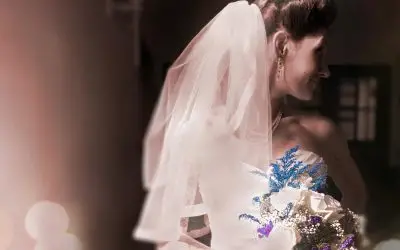
Can I incorporate the original veil into my wedding?
Yes — vintage veils can also be restored professionally. A matching veil from the same era adds a beautiful layer of continuity to the whole look.
How do I find a specialist in Chicago?
Ask specifically about their experience with vintage bridal fabric — not just modern gowns. Ask to see examples of past restoration work.