Planning your wedding dress shopping timeline starts the moment the big day is set on the calendar.
Most brides underestimate how much time a gown actually needs — from ordering to final fitting to pressing — and that gap causes unnecessary stress.
Start early, follow a clear schedule, and your dress will be ready and perfect when it matters most.
Starting early makes all the difference
The single biggest mistake Chicago brides make is waiting too long to shop. Designer and made-to-order gowns take four to six months to produce after you place your order — sometimes longer for heavily embellished styles with hand-sewn lace or beading.
Add two to three months for alterations and fittings, and you need at least nine to twelve months from your first appointment to your wedding day.
Popular bridal boutiques in and around Chicago book up fast, especially on weekends during the spring and fall wedding seasons. If you walk in expecting a same-day appointment nine months out, you may already be behind.
Understanding how long a wedding dress stays white also helps you plan storage between delivery and the wedding — fabric care starts well before the ceremony.
When to start shopping?
Begin browsing silhouettes, fabrics, and designers at least twelve months before your wedding. This stage is about inspiration — Pinterest boards, bridal magazines, and boutique Instagram accounts. You do not need to try anything on yet, but you should establish a realistic budget.
In 2023, the average cost of a wedding dress in the US was around $2,000, and wedding attire typically accounts for about 7% of the overall wedding budget.
By nine to ten months out, book your boutique appointments and start trying on gowns seriously. Bring your wedding shoes and the undergarments you plan to wear — hem length depends on both.
Once you find the one, place your order immediately. Waiting even a few extra weeks at this stage can push your delivery dangerously close to your fitting window. If you are curious about dress ideas for your wedding party as well, this is the right time to coordinate those decisions, too.
Here is a simple timeline to keep on your fridge:
- 12 months out — research styles, set your budget, follow bridal boutiques
- 9–10 months out — book appointments, try on gowns, place your order
- 5–6 months out — first alterations fitting when the gown arrives
- 2–3 months out — second fitting, fine-tune adjustments
- 2–3 weeks out — final fitting, pickup, and pressing
The alteration process actually works
Most brides need two to three fittings to get a perfect fit. Your first fitting happens as soon as your gown arrives — typically five to six months before the wedding. This session focuses on the overall silhouette: hemline, bust support, waist shaping, and strap adjustments.
Bring your exact wedding shoes because the hem length is cut and finished based on your heel height.
Your second fitting, around two to three months out, is where the seamstress fine-tunes every detail. You should practice sitting, walking, and even dancing at this appointment — comfort and movement matter as much as appearance. The final fitting happens two to three weeks before the wedding.
At this point, everything should be perfect. Your maid of honor should attend this session to learn how to bustle the train. How to hang a strapless dress correctly after your final fitting also matters — improper hanging distorts delicate fabric before you even walk down the aisle.
When to press your wedding dress?
Pressing your wedding dress is the final step before the big day, and timing it correctly is just as important as the fitting schedule.
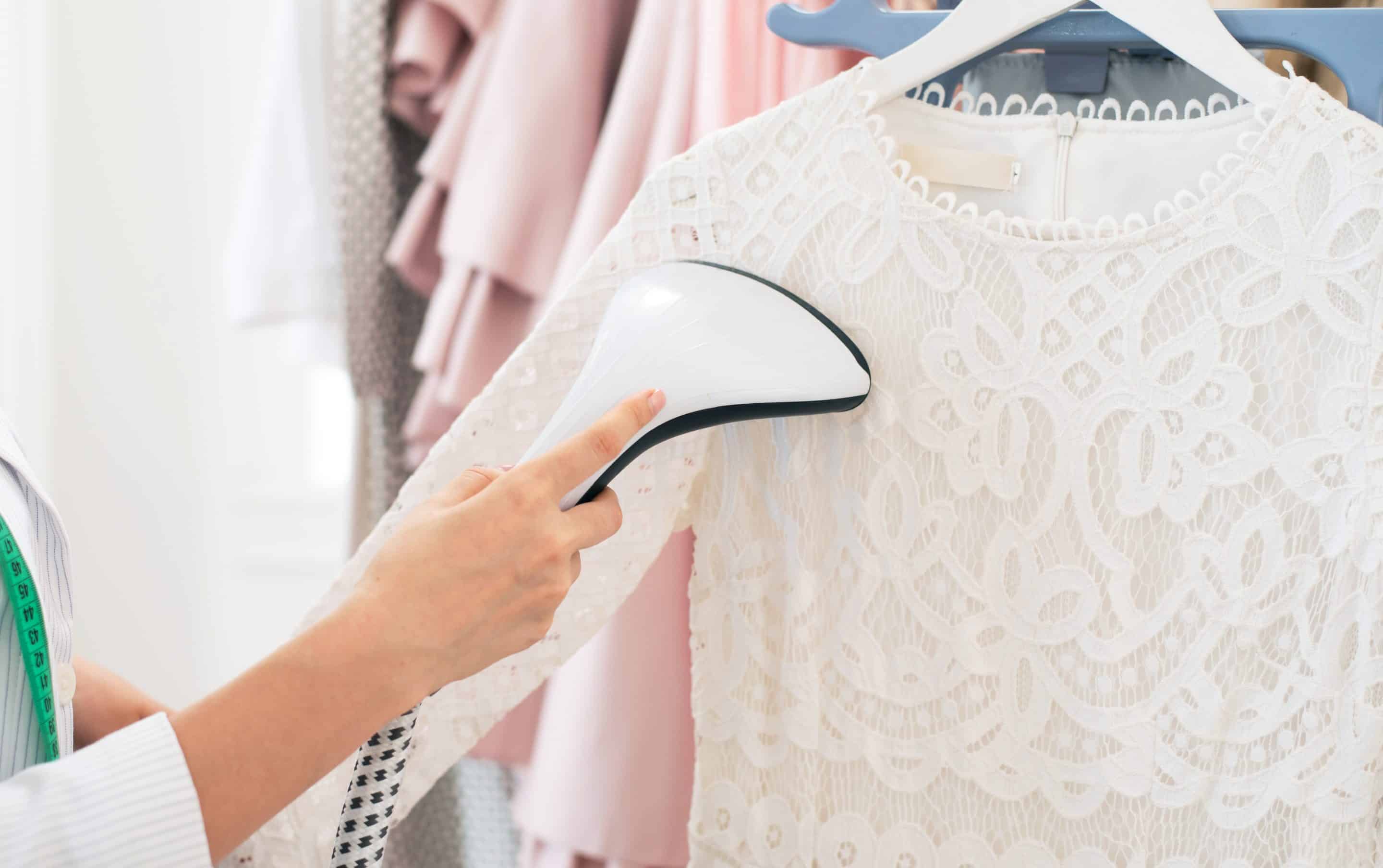
Most brides arrange professional pressing two to four days before the wedding — close enough that wrinkles do not return during storage, but with enough buffer time to address any issues. Getting creases out of a wedding dress requires skill and the right equipment, especially for delicate fabrics like silk, chiffon, or tulle.
Never attempt to iron a wedding dress at home without first understanding the fabric. High heat on the wrong material causes permanent damage. Chicago brides trust professional pressing services that know exactly how to handle wedding dress wrinkling without risking the gown’s structure or embellishments.
If your dress has a veil, press it at the same time — learn more about how to remove creases from a wedding veil so both pieces look flawless together on the day.
Storing your dress between delivery and the wedding
Once your gown arrives from the boutique, you may have several months before the wedding. How you store it during that period directly affects how it looks when pressed and worn.
Keep it in a breathable garment bag, away from direct sunlight and humidity. Never store a wedding dress in a regular plastic bag — trapped moisture causes yellowing and fabric deterioration.
Chicago’s humid summers make proper storage especially important. Brides who receive their gown during warmer months should pay close attention to how to store a wedding dress in temperature-stable spaces.
Basements and attics are the worst options — both expose fabric to extreme temperature swings. A cool, dry bedroom closet with a proper garment bag is your safest bet. If you have concerns about fabric condition after extended storage, a professional assessment before pressing will catch any issues early.
What to do with your dress after the wedding?
Once the wedding is over, the dress still needs attention — and quickly. Stains from food, champagne, and grass set faster than most brides expect.
Getting the gown professionally cleaned within the first few weeks after the wedding protects the fabric and preserves all your options going forward. Understanding what wedding dress preservation is helps you decide whether to box the gown for long-term storage, repurpose it, or sell it.
Chicago brides who plan to store their wedding dress for two or more years should invest in professional cleaning and acid-free preservation boxing right after the wedding. This keeps the fabric stable and prevents the yellowing that affects untreated gowns over time.
If you are considering repurposing your gown into something new, cleaning it first gives any seamstress the best possible material to work with — and keeps every option open.
Helpful Guidance:
These articles will help you manage your dress from fitting through to after the wedding:
- How to iron a wedding dress — fabric-by-fabric guidance for safe at-home touch-ups before pressing
- Wedding dress without a steamer — practical alternatives when professional equipment is not available
- Best way to preserve your wedding dress — everything you need to know about post-wedding care and long-term storage
Expert bridal advice worth reading:
For a deeper look at the full bridal shopping journey — from boutique appointments to budget planning — this complete wedding dress shopping guide from The Knot covers every stage with expert input from bridal stylists across the country.
FAQs
When is the best time to start shopping for a wedding dress?
Start shopping nine to twelve months before your wedding. This gives you enough time for boutique appointments, ordering, production, and alterations without any rushed decisions or extra fees. Brides on shorter timelines should ask about off-the-rack or sample sale gowns.
How long does it take for a wedding dress to arrive after ordering?
Most made-to-order gowns take four to six months to arrive after you place your order. Some designer gowns with heavy embellishment can take up to nine months. Always confirm the production timeline with your boutique at the time of purchase.
How many alterations and fittings will I need?
Most brides need two to three fittings. The first covers major structural adjustments, the second fine-tunes the fit, and the final fitting confirms everything is perfect. Brides with more complex gowns or significant body changes may need an additional session.
When should I schedule my first alterations fitting?
Book your first fitting for when the dress arrives — usually five to six months before the wedding. Do not schedule fittings too far in advance, as body changes between fittings and the wedding day can affect the final fit.
How soon before the wedding should I get my dress pressed?
Two to four days before the wedding is the ideal window. This is close enough that wrinkles will not reset during storage, but leaves time to address anything unexpected. Never leave pressing until the morning of the wedding.
Can I press a wedding dress at home?
Only with extreme caution and full knowledge of the fabric type. Many bridal fabrics — silk, chiffon, tulle, and delicate lace — require specific heat settings and techniques. For most brides, professional pressing is the safer and more reliable choice.
What happens if my body changes between ordering and the wedding?
Alterations can typically accommodate one to two size changes up or down. If you expect significant changes, communicate that clearly with your seamstress at the first fitting so she can plan accordingly and leave enough fabric in the seams.
Is it okay to buy a wedding dress off the rack?
Absolutely. Off-the-rack gowns can be purchased and taken home the same day, which works well for brides on shorter timelines. A skilled seamstress can alter an off-the-rack gown to fit just as beautifully as a custom-ordered one.
How do I store my dress between the final fitting and the wedding day?
Keep it in a breathable garment bag in a cool, dry room away from direct light. Avoid hanging it from a thin hanger for extended periods — use a padded hanger or lay the dress flat to prevent distortion of delicate fabric and seams.
What should I do if my dress arrives with a stain or damage?
Contact your boutique immediately and document the issue with photos. Most reputable boutiques will work with you to resolve manufacturing defects. For minor stains acquired during fittings, a professional cleaning service can treat them before pressing.
Can alterations fix a wedding dress that is several sizes too large?
Yes, in most cases. Taking a dress in by two or more sizes is more involved but entirely possible for an experienced seamstress. Letting a dress out is harder and depends on how much seam allowance is built into the gown — always ask about this before purchasing.
Do I need to clean my dress before storing it after the wedding?
Yes — always. Even if the dress looks clean, invisible stains from body oils, champagne, and grass will oxidize over time, turning the fabric yellow. Professional cleaning before storage protects the gown and keeps it in excellent condition for years to come.
Call (331) 267-5100 or visit chicagoweddingdresscleaners.com for a free consultation. Free pickup and delivery throughout Chicagoland, Northwest Indiana, and Southeast Wisconsin.