
DuPage County is one of the most popular wedding destinations in the Chicagoland area — and these care tips apply to every bride getting married here.
Every one of them will face the same question the morning after: What do I do with this dress now?
These five tips are built specifically for DuPage County brides who want to protect their gown from the moment they say yes to the dress until long after the last dance.
Tip 1
The biggest mistake DuPage County brides make is leaving the gown folded in a bag for weeks after the wedding while they decompress, honeymoon, or catch up on life. Every hour counts when it comes to stain treatment.
Champagne, grass from outdoor ceremony photos at venues like Cantigny Park or the Morton Arboretum, cake frosting, and body oils all begin to set into fabric fibers almost immediately upon contact.
Invisible stains are the real danger. White wine, clear soda, and perspiration leave no visible mark on the wedding day but oxidize over the following weeks and months — turning fabric yellow or brown in patches.
How long a wedding dress stays white is directly tied to how quickly it receives professional attention after the wedding. DuPage County brides should aim to have the gown picked up for professional cleaning within two weeks of the wedding — not two months.
Here is what to do immediately after the wedding:
- Hang the dress on a sturdy padded hanger in a cool, dry room as soon as you get home
- Never leave it crumpled inside a garment bag or sealed plastic for more than a day
- Note every stain location — food, drink, grass, makeup — so your cleaner can pre-treat each area
- Keep it away from direct sunlight, which yellows fabric even over short periods
Tip 2
Professional cleaning for a wedding gown goes well beyond a standard garment clean.
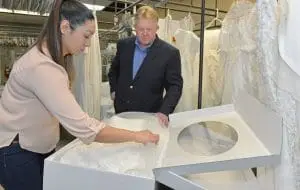
A specialist inspects the entire dress under proper lighting, identifies every visible and invisible stain, pre-treats each area according to the specific fabric type, and processes the gown using methods safe for delicate bridal materials, including silk, lace, tulle, and beading.
This level of care is not available at a general garment service.
DuPage County brides who understand the details of wedding dress preservation are better prepared to ask the right questions before handing over the dress.
Ask whether the cleaner works on the gown in-house or sends it off-site. Ask whether they pre-treat stains individually or run the whole gown through a single process.
Ask about their experience with the specific fabric your dress uses — silk organza, French lace, and polyester satin all require different handling.
Chicago Wedding Dress Cleaners serves the entire DuPage County area with free pickup and delivery, so you never need to transport your gown yourself.
Tip 3
Dress care does not start after the wedding — it starts the morning of. How you handle and wear the gown throughout the day directly affects its condition when you take it off.
DuPage County outdoor venues like Danada House in Wheaton and Cantigny Park in Wheaton involve significant walking across grass and garden paths, which means hemline exposure is a real concern from the ceremony onward.
Fashion tape for a strapless dress is one of the most practical tools a bride can use on the day — it keeps the bodice secure and reduces the constant pulling and adjusting that causes fabric stress over hours of wear.
Knowing what to wear over a strapless dress during outdoor portions of the day — a wrap, a bridal jacket, or a cover-up — also protects the bodice from direct sun exposure, which fades fabric color and weakens fibers over time.
Assign a trusted bridesmaid to hold and manage your train whenever you are moving between the ceremony and reception spaces.
Dragging a train across paved areas, grass, or dance floors picks up grit and debris that grinds into fabric fibers with every step. The less your hemline comes into contact with outdoor surfaces, the easier your post-wedding cleaning will be.
Tip 4
If there is a gap between your wedding and your professional cleaning appointment — even a few days — how you store the gown during that window matters.
Hanging is fine for very short periods, but never hang a heavy gown from a thin hanger by the shoulder seams.
The weight of a full bridal gown stretches the shoulder seams and distorts the bodice permanently when hung incorrectly. Use the internal fabric loops sewn into the waist of the dress — most gowns have them — to distribute the weight correctly.
How to hang a strapless dress without causing damage is something every bride should know before the gown ever comes off. Avoid plastic bags entirely — sealed plastic traps moisture and creates the perfect environment for yellowing and mildew to develop.
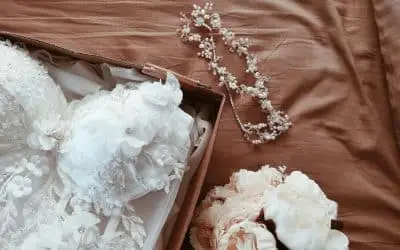
A breathable garment bag in a cool, dark, climate-stable space is the right short-term option. For long-term storage after professional cleaning, acid-free storage for wedding dresses, using archival-quality boxes and tissue paper, is the only approach that protects fabric over the years and decades.
Tip 5
DuPage County brides who go into post-wedding storage without a plan often end up with a dress that sits in a box for a decade without any clear purpose.
The best time to decide what you want to do with your gown is before it gets preserved — because the decision affects how the cleaning and boxing process should be approached.
If you are keeping the dress as a family heirloom, invest in full professional preservation with acid-free boxing and tissue. If you are planning to sell it, have it professionally cleaned and get it listed quickly — a freshly cleaned gown commands a significantly higher price on resale platforms.
If you want to turn the dress into a keepsake — a robe, a quilt, a shadow box — cleaning it first gives any seamstress the best possible material to work with.
Helpful Guidance:
These articles are especially useful for DuPage County brides navigating post-wedding dress care:
- Spot cleaning a wedding dress at home
- How to store your wedding dress
- Wedding dress preservation kit
Expert advice worth reading:
For a complete overview of everything involved in caring for your wedding dress after the big day — from stain treatment to long-term storage — this wedding dress preservation guide from The Knot covers every fabric type with expert recommendations from bridal care specialists across the country.
FAQs
How soon after my DuPage County wedding should I have my dress cleaned?
Within two weeks is the ideal window. Stains from food, champagne, grass, and body oils begin to set immediately and become increasingly difficult to treat the longer they go untreated.
Does Chicago Wedding Dress Cleaners serve DuPage County?
Yes — Chicago Wedding Dress Cleaners provides free pickup and delivery throughout DuPage County, including Naperville, Wheaton, Downers Grove, Elmhurst, Lombard, Glen Ellyn, Lisle, Oak Brook, Darien, and all surrounding communities.
What stains are most common for DuPage County outdoor wedding venues?
Grass stains along the hemline, champagne and wine spills, floral dye from bouquet contact, and perspiration marks around the bodice and underarms are the most frequent issues.
Should I remove my wedding dress from the garment bag it came in before storing it?
Yes — always. Most garment bags from bridal boutiques are plastic or plastic-lined, which trap moisture and promote yellowing.
Can I store my preserved wedding dress in my DuPage County basement or attic?
No. Both locations experience significant temperature and humidity fluctuations across Chicagoland’s seasons, which accelerate fabric yellowing and deterioration.
What if my dress has outdoor venue stains that do not look serious?
Have them professionally assessed anyway. Stains that appear minor — or completely invisible — on the wedding day are often the most problematic in storage.
Is professional preservation worth it for a dress I plan to sell?
Absolutely. A professionally cleaned and preserved gown sells faster and at a noticeably higher price than an untreated one on any resale platform.
How should I transport my dress to a cleaning appointment in DuPage County?
Ideally, you should not have to transport it at all. Chicago Wedding Dress Cleaners offers free pickup from your home across DuPage County, so your gown never has to be crammed into a car or folded into a bag for transport.
Can a dress worn at a garden venue like the Morton Arboretum be fully cleaned?
Yes — grass, floral, and outdoor stains are very common and treatable when addressed promptly by a professional with bridal fabric experience.
What is the difference between cleaning and preserving a wedding dress?
Cleaning removes stains, body oils, and surface soiling from the fabric. Preservation goes further — after cleaning, the gown is wrapped in acid-free tissue and sealed in an archival-quality preservation chest designed to prevent yellowing, mould, and fabric deterioration over decades.
How long does professional wedding dress cleaning take in DuPage County?
Most professional cleaning and preservation services take two to eight weeks, depending on the service and the gown’s complexity.
Can I have my wedding veil preserved alongside my dress?
Yes — Chicago Wedding Dress Cleaners cleans and preserves veils, shoes, gloves, and other bridal accessories alongside the gown.
Call (331) 267-5100 or visit chicagoweddingdresscleaners.com for a free consultation. Free pickup and delivery throughout Chicagoland, Northwest Indiana, and Southeast Wisconsin.